 EN
EN

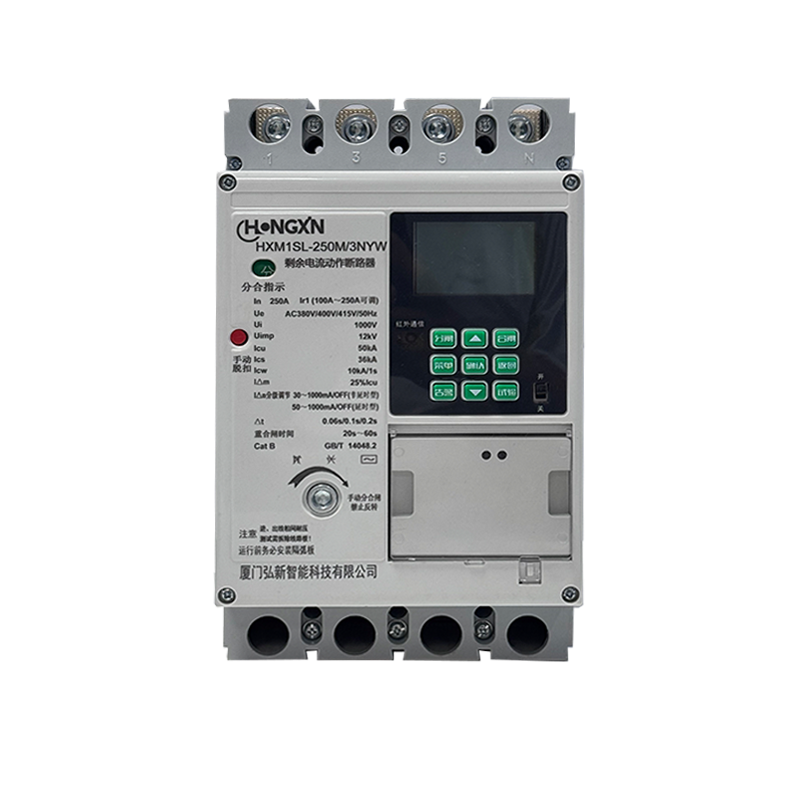
Vacuum Breakers: Breaking Barriers at the Top End of the Voltage Spectrum
What happens during the quenching of a vacuum arc: fast reconnection of the plasma arc and rapid current restoration
When the contacts of the vacuum circuit breaker open, a metal vapor is ionized and forms a plasma arc. At the extreme vacuum level (pressure < 10^-4 torr), the charged particles vacuum deposit onto the contacts, enabling the rapid reconnection of the plasma arc within 1-5 ms. This also allows for the current sheath to provide rapid insulation to the system prior to the next system voltage pulse, allowing reliable control of the arc at the precise first instance that the current is expected to drop to zero and control the arc formation. The vacuum level allows approximately 1000 times more mean free path for electron flow than that of SF6 gas. This is the fundamental reason that vacuum circuit breakers are superior to gas and air circuit breakers in the safe interruption of electrical current.
Sub-15 ms interruption speed and better zero-crossing suppression than SF₆ and air-break alternates.
With respect to fault interruption, vacuum interrupters can clear faults in 15 ms or less, which is 30 – 50 % faster than SF6 or air-break systems. Because a vacuum interrupter is located in a vacuum, the speed with which it can overcome an interruption is not governed by complex gas flow mechanisms, which is, however, the case with gas insulators. In the 72.5 kV class, vacuum interrupter technology performs almost three times better than SF6 on those pesky TRV’s compared to what most engineers consider average. Most engineers consider conventional air-break mechanisms to require at least 8 to 10 current zero crossings before they can reliably interrupt an arc. Vacuum interrupters, on the other hand, are expected to interrupt all arcs (up to 99.8 % arc extinction, as per IEC 62271-100) in 2 or less. A 100% real-life Vacuum interrupter applications have also shown substantially lower voltage spikes. Real-life tests have also shown that there are approximately 40 % fewer voltage spikes compared to gas insulated vacuum switches.High Dielectric Strength Enables Compact, Reliable HV Integration
Vacuum's intrinsic dielectric strength (>30 kV/cm) and scalable contact-gap design for 72.5–145 kV applications
The vacuum exhibits remarkable dielectric strength greater than 30 kV per cm, allowing for efficient insulation of high-voltage systems without the use of additional gases. This characteristic enables engineers to optimize contact gap spacing within standard IEC-sized ratings of 72.5 kV to 145 kV. Unlike SF6 breakers, vacuum technology is superior because it maintains consistent performance regardless of temperature, altitude, and humidity. Additionally, vacuum technology alleviates gas management concerns, allowing for reliable substation operation under adverse conditions.
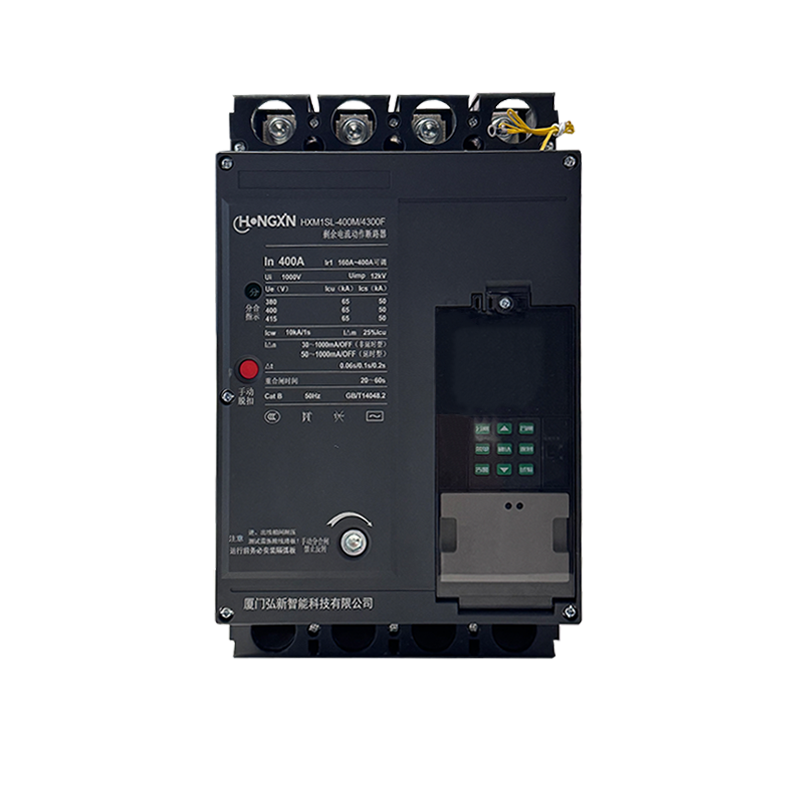
Space and weight advantages: 30–40% less footprint in GIS and hybrid substations than SF₆ breakers
Vacuum does have really high dielectric strength, allowing for much smaller contact gaps between components. This results in interrupters that are smaller in size and thus, more compact breakers overall. The space savings are quite significant. When comparing gas insulated switchgear (GIS) installations that use vacuum technology rather than SF6, it is common to use roughly 30 to 40 percent less space. The operating mechanisms are also lighter, in some cases, up to 60%. This is particularly advantageous for hybrid substations since it improves busbar routing and retrofitting speeds. In grid upgrades across Europe, many companies have reported roughly 35% more space after implementing vacuum technology at the standard 145kV.
Long-Term Reliability with High Duty Cycle HV and Little Maintenance
More than 20,000 operations < 0.001% failure rate per IEEE C37.09-2018
Vacuum interrupters that are hermetically sealed and won’t be affected by their surroundings can exceed 20,000 mechanical operations with failure rates less than 0.001% per the IEEE C37.09-2018. Because there are no places for gas leakage or dynamic seals, the dielectric strength is sustained for many years of service. Field data indicates that many utilities experience roughly 30 years of service before replacement of 72.5 kV components. Conversely, for the newer designs, operators experience about 40% cost savings. The absence of design limits moving parts and sliding contacts that typically fail during repeated fault clearing operations is what enhances the reliability of these designs.
No gas management, moisture-related issues, or toxic decomposition byproducts—removes the main failure modes of SF₆ systems.
Vacuum interruption systems bypass three major points of failure of the compressed gas system:
No gas management: No SF₆ management, leakage detection, or expensive reclamation gas management
Moisture immunity: Humidity-related dielectric breakdown, a primary cause of SF₆ breaker failure, is avoided.
Non-toxic: No gas system contaminating metal fluoride byproducts
As a result, utility case studies showed that maintenance requirements decreased by 75%. Plus, they sidestepped the $740,000/year average SF₆ emission penalties mentioned in the EPA compliance audits. The solid-contact design also avoids the contact erosion decomposition that occurs in gas interrupters after a few short-circuit operations.
Evolving Voltage Ranges: From Medium Voltage to High Voltage
Deployments
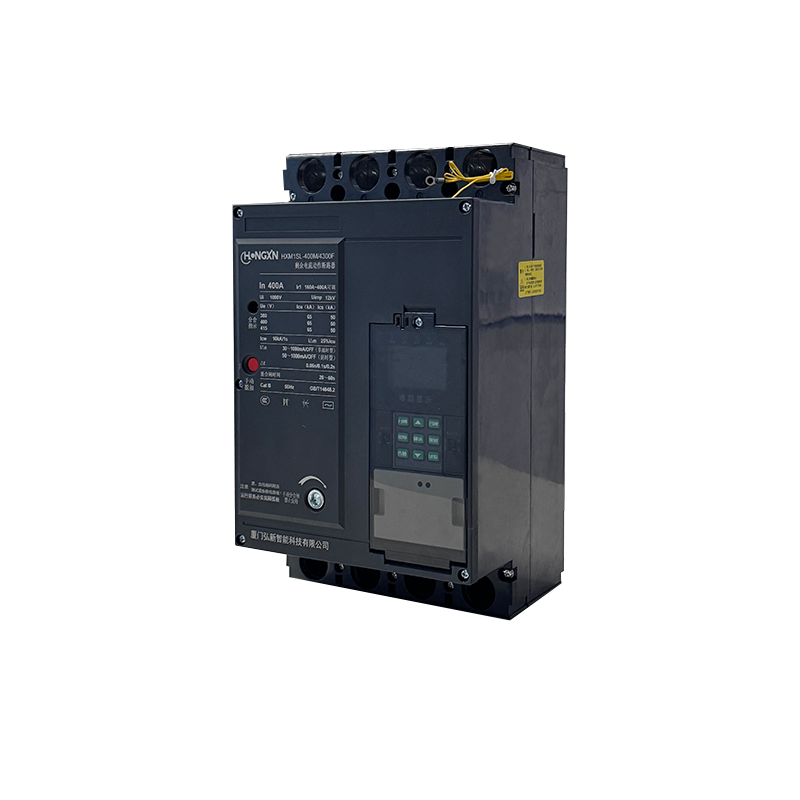
Standardized vacuum circuit breakers have rated (12–145 kV) and 145 kV utility installations
Vacuum circuit breakers have recently evolved to improve their utility in operating under medium and 145 kV high voltage systems. The development of contact materials, vacuum, sealing, and electromagnetic actuation, have improved their use in 145 kV installations. They have an operating breaking capacity of up to 40 kA (i.e. < 20 ms). These breakers replace larger primary equipment solutions in the ultra-wide temperature ranges of -40 up to +55 degrees Celsius and in consideration of the absence of environmentally harmful gas.
Vacuum Interrupter Technology for 245kV: IEC 62271-100 Standards and Multi-Break Series-Interrupter Developments
Manufacturers have been commercializing vacuum technology for 245KV applications with multi-break series interrupter designs. In essence, they are assembling multiple vacuum interrupters so that the voltage is evenly distributed across multiple devices instead of being concentrated in one place. These designs have recently become compliant with IEC 62271-100 standards for 245kV/ 50kA breaking capacity, a significant breakthrough for the industry. One of the prototype models is designed to interrupt current flow in 2 electrical cycles, making it 40% faster than traditional single break interrupters. Additionally, this model employs copper-chromium (Cu/Cr) contact
systems that reduce chopping current to < 3 A. Several early prototype models have been incorporated into the European power grid since last year. Most industry experts believe that vacuum technology will ultimately substitute SF6 gas in high voltage applications where environmental concerns are a priority.
FAQ
What is the main benefit of using vacuum circuit breakers as opposed to SF6 and air-break systems?
When it comes to high voltage systems, vacuum circuit breakers have quicker recovery of dielectric strength which leads to quicker quenching of the arc and reduced voltage spikes. This means that vacuum circuit breakers can operate at a much higher level of efficiency than the other systems.
What can you tell me about the design of SF6 breakers that makes it possible for vacuum interrupters to have a smaller size?
Due to the SF6 breakers having a lower dielectric strength, they need to have larger contact gaps. Because of this, vacuum interrupters need about 30-40% less space than the SF6 breakers.
Vacuum interrupters have a lifespan of over 20,000 operations, and because of this they have low failure rates. This low failure rate means that they can operate at about 30 years of success. This low rate of failure and high rate of success means that vacuum interrupters can have about 40% lower costs than the older technologies due to the less required maintenance and repairs
Is there an advantage to using vacuum interrupters over SF6 breakers when it comes to the environment?
Of course! Vacuum interrupters eliminate the need for gas management systems, and they are also moisture immune. There are little to no hazardous byproducts produced. Because of this, there are less environmental costs as well as less financial costs associated with SF6 systems.