 EN
EN

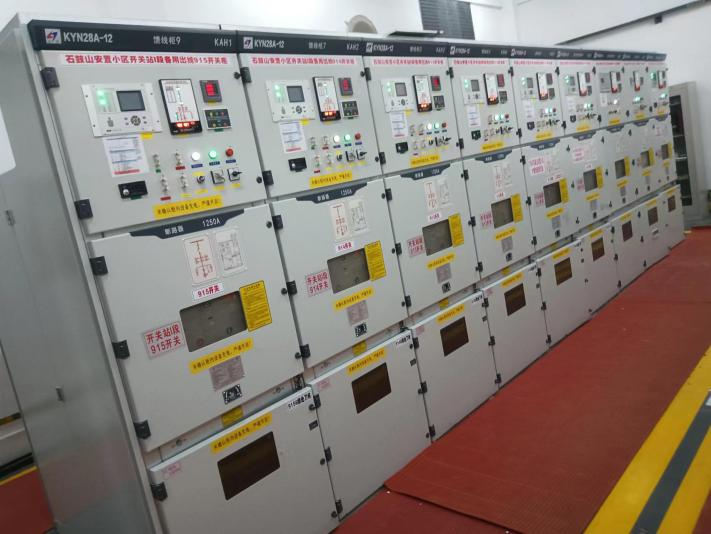
Excessive Voltage Drop: Causes, Impact, and Systematic Remediation
How voltage drop affects the operation of equipment and the loss of energy in low voltage distribution
A voltage drop in low voltage (LV) distribution systems is problematic for many factors. IEEE research in 2022 shows that both motors and fans tend to run hotter by 12 to 15 percent with only a 5% voltage drop. Lighting is less effective, losing 20% of its lit output, and sensitive electronics begin to malfunction. These issues can be financially serious. The Ponemon Institute reported in 2023 that the average facility loses $740,000 annually as a result of these issues. The biggest offenders to these issues are corroded electrical joints and under-sized wiring. These conditions all create more resistance in a circuit and cause components to wear out faster and overall system losses to be higher.
Application of Ohm's Law & Impedance Modeling to Analyze and Forecast Voltage Drop in Low Voltage Circuits
For engineers, Ohm's Law (V=IR) and Impedance Modeling are good first principles to use because they assist in predicting problems, particularly in voltage drops. The primary factors include the Measurement and Management of Resistance at specific circuit locations, the behavior of the current at peak load, and the construction of voltage differential maps for overall circuit analysis. ETAP and SKM PowerTools are popular software packages used to assist in completing these analyses. The result is the identification of risk areas, primarily in the circuit lengths exceeding the outlined 3% voltage drop corridor set by NEC 2023 guidelines. Identifying these areas hightlights where maintenence teams need to concentrate their efforts.
Real-world solutions: Optimization of Wire Gauge, Load Distribution, and Feeder Reconfiguration
The combination of material science and system design results in proven solutions:
Conductor Reconfiguration: The increase of wire gauge is linear with the decrease of resistance. Copper, for construction material, is ~40% less resistive than aluminum. This assists in equal ampacity.
Phase Load Balancing: Equalizing the load on all the phases helps in reducing the current of the neutral and the losses associated.
Reconfiguration-based feeder path shortening reduces cumulative voltage drops.
The Department of Energy relays that utility companies employing such techniques experience 30% less downtime and save 18% in costs (U.S. Department of Energy 2024).
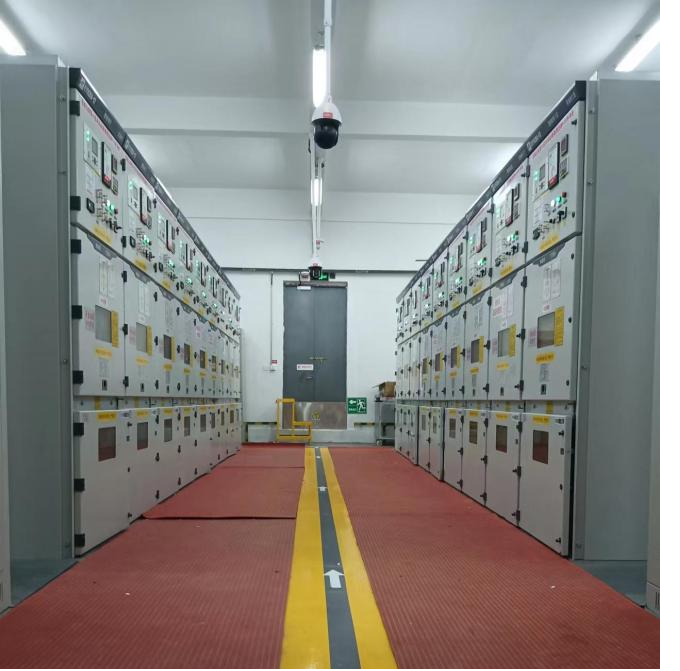
High-Resistance Connections: Loose Terminals to Corrosion Failures
Thermal degradation of joints and why it is the leading cause of faults in the low voltage distribution system.
The leading cause of failure in low voltage systems is high resistance connections. Good industry data shows it to be 40% of all issues related to low voltage. In our experience, they occur when terminals are dubbed loose, when corrosion is present, and also at unserviceable contact points of the system. According to Joule's Law, resistance and heat have an exponential relationship. An increase in temperature of even 10 degrees Celsius is enough to reduce the lifespan of the insulation by 50% in less than a week. The problem is coastal areas because the salty air accelerates corrosion in contact points of metal parts. Inland factories that produce industrial pollution have painfully low voltage contact points due to the presence of sulfur dioxide in the moist air. When it is left alone, the arcing process starts to carbonize materials increasing the severity until the system fails catastrophically.
Best Practices for the Integrity of Termination: Torque, Anti-Oxidant, and Infrared Thermography
Proactive risk mitigation is based on three integrated practices:
Torque application within calibration: Ensures uniform application of mechanical pressure—too little will allow for the loosening of the connection due to vibration, whereas too much will deform the conductors and reduce the contact area.
Dielectric grease with zinc nanoparticles: Inhibits the passage of moisture and prevents oxidation, especially in humid and corrosive environments.
Load testing with infrared thermography: This technique reveals the presence of “hot spots” that are otherwise undetectable. If there is a thermal deviation of ≥5°C from the baseline, the situation requires immediate attention.
When applied collectively, these practices have been shown to reduce connection related LV failures by 78% in documented cases in the industry.
Environmental Stressors: Moisture, Corrosion, and Enclosure Integrity in Low Voltage Distribution
Corrosion pathways in coastal, industrial, and humid environments—and their impact on LV panel longevity
Corrosion really speeds up in tough environments. Take coastal areas for instance, where salty air causes galvanic corrosion problems in metal parts. Industrial areas face different challenges too, since pollutants such as sulfur dioxide create acid on electrical connections. And don't forget about those constant wet-dry cycles that wear down copper busbars and steel enclosures through electrochemical damage over time. The numbers tell a story worth noting - contact resistance tends to jump around 300% within just five years, leading to equipment overheating and less heat handling capability. Panels exposed to these conditions typically last only 40 to 60 percent as long as ones kept in controlled climates, which means replacing them sooner than planned and dealing with all sorts of operational headaches along the way.
Elaborating on enclosures (IEC 61439-1, IP ratings) and preventive maintenance measures
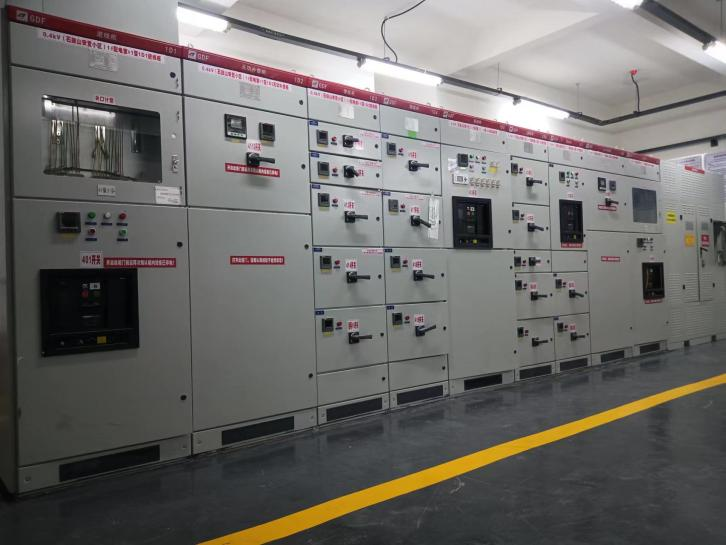
Enclosures must meet IEC 61439-1 requirements and corresponding IP ratings for environmental severity—use IP55 rated enclosures for general industrial applications and IP66 for coastal and washdown environments—to control moisture and particulate ingress. As part of quarterly maintenance, carry out the following:
1. Durometer testing to assess duct gasket condition
2. Application of terminal corrosion inhibitors, rated NSF H1
3. Internal humidity measurements using calibrated hygrometers
4. Thermal imaging during peak load operation to assess hotspots and for preventive maintenance.
In a 2023 Reliability Study, corrosion preventive maintenance measures were shown to reduce maintenance and operational issues by 70% in all extreme environments.
A Protection System's Reliability: Aging Devices, Coordination Errors, and Diagnostic Missteps
Why do relay drift and circuit breaker wear cause nuisance tripping or do not operate when needed in low voltage distribution?
Older protective equipment, such as relays and circuit breakers, tend to become uncalibrated due to aging and mechanical wear, leading to less accurate operational response to fault conditions. As relay contacts oxidize, resistance increases and delays trip times. Similarly, circuit breaker springs weaken causing unpredictable opening and closing actions. The Energy Reliability Council stated in 2023 that nearly half (about 42%) of all unplanned outages of low voltage protection systems worn out. These problems commonly show up as:
Nuisance tripping disrupts business operations without cause;
Failure to trip increases risk of arc flash and equipment failure by keeping protection systems from fully functional during fault conditions. Thermal imaging tested at aged circuit breaker terminals that show >15°C is an additional warning.
Contemporary diagnostics: Strategy for condition-based replacement, thermography, and time-current curve analysis
With modern diagnostics, protective relay systems’ predictive maintenance systems are possible. The TCC curve analysis determines time-based trip settings, and compares these to manufacturer time settings to identify drift before trips are possible in the field. Thermographic imaging captures heating anomalies at connection within ±2°C. When combined with other methods like partial discharge detection, these become the “predictive triad,”
Predictive Diagnostic method X Metric of Diagnostic method Prevention of Failure Action
When considering condition-based replacement in which only the components showing measurable degradation are changed, there is an equipment life extension of 35% and an unexpected failure reduction of 60% (IEEE Maintenance Report 2023). This new approach utilizes data to eliminate calendar-based replacement schedules and optimize maintenance efforts, spare parts, and downtime planning for electrical maintenance programs.
FAQs
Excessive voltage drop in low voltage distribution systems what is the cause?
There is an increased resistance and with low voltage distribution systems the use of insufficient wire gauges and corroded electrical connections leads to an increased resistance and energy losses.
How does excessive voltage drop impact equipment?
Operational costs of equipment like motors and lights will increase and heat will be generated causing inefficiencies and a decline in performance.
What techniques are used to detect voltage drop problems?
Ohm's Law, impedance modeling, and tools like ETAP are used by engineers to identify and model voltage drop in systems.
What can businesses do to mitigate voltage drop in systems?
Conductor upgrades, phase balancing, and feeder reconfiguration are the most effective ways to reduce voltage drop and improve efficiency.
What are some maintenance strategies to avoid losing the integrity of terminations?
To help lose the integrity of terminations, apply calibrated torque, use dielectric grease, and perform load test infrared thermography.