 EN
EN

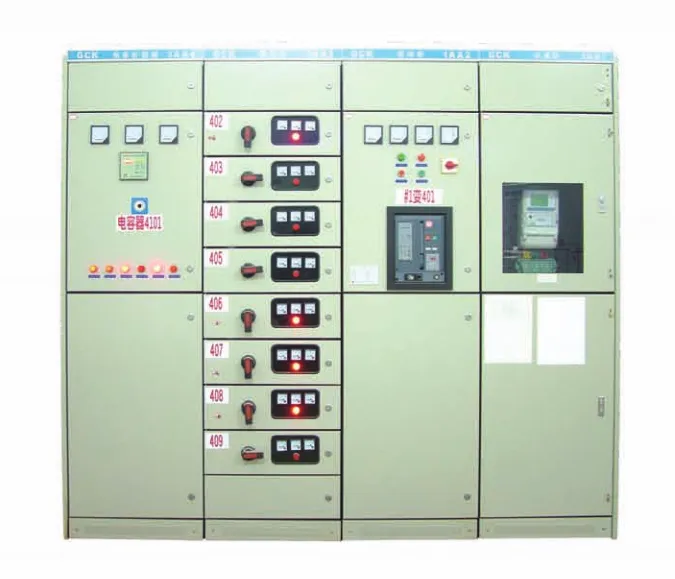
MCCB Benefits for Dependable Industrial Power
MCCBs provide essential safeguards for industrial power networks thanks to two core engineering advantages. Our MCCBs are designed to help ensure operational continuity in tough conditions encountered in industrial factories.
Main and sub-feeder industrial breakers maintain a breaking capacity of 10–200 kA and a current rating of up to 2500 A.
Molded case circuit breakers offer an electrical solution for the protection of industrial plants. Manufacturing plants utilize large amounts of energy to operate their machines, meaning plants can face extremely dangerous electrical faults. An exposed wire, for example, can create a short circuit and draw current flows upwards of 200,000 A. This is likely to result in catastrophic, irreparable, and possibly life-threatening damage. MCCB's provide a solution as they can withstand continuous currents of up to 2500 amps. In the case of an electrical fault or issue, MCCB's limit their interruption to the part of the electrical system in which the fault has occurred. Manufacturing plants, particularly steel plants, are prone to arc flash incidents. This is due to the prevalence of fault currents exceeding 100 kA. However, steel plants equipped with MCCB protection intended for 150 kA fault conditions can minimize the likelihood of arc flash incidents. In the 2022 Electrical Safety Quarterly, it was shown that plants equipped with adequate MCCB protection experienced lower costs associated with replacing electrical equipment. In fact, protection that is appropriately sized for the electrical fault conditions of the system can be associated with up to a 75% decrease in the costs associated with replacing electrical equipment.
Thermal overload, and short circuit trip switches, protect against overcurrent without the need for additional parts, and are reusable.
By providing electrical and thermal protection, integrated thermal-magnetic systems provide the most protection against electric problems. The thermal component monitors prolonged overloads caused by bimetallic strips, which bend after excessive current flow. This is particularly helpful for conveyor motors that are at risk of pulling 130% additional power during startup. For short circuits, additional protection is available. Magnetic coils are designed to respond to rapid current increases between 500% and 1000% of the normal flow. MCCBs are preferred over regular circuit fuses because they are designed to be reset after tripping, allowing them to be reusable. Companies report an average of $18,000 savings in maintenance costs due to reduced need for maintenance. The development of these systems can facilitate smooth collaborations and avoid unwanted shutdowns, such as those caused by the initial powering of transformers.
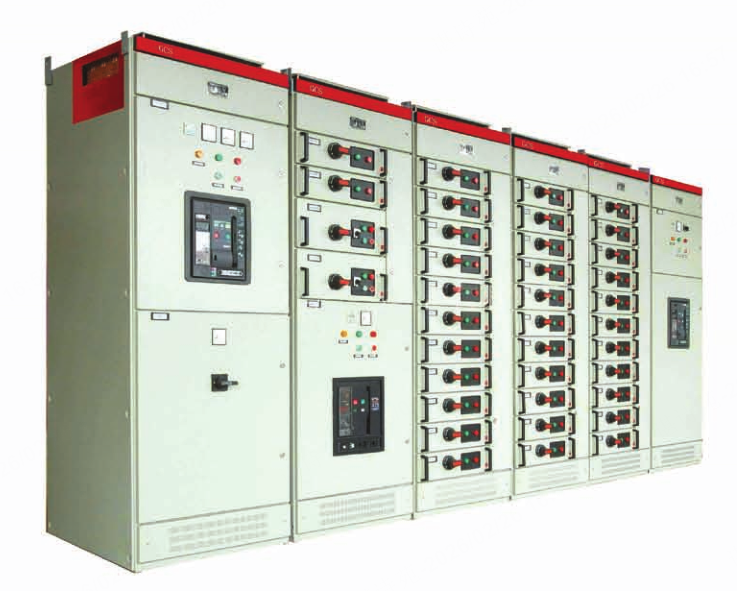
Adaptive MCCB Protection for Changing Operational Loads
Custom trip settings avoid nuisance tripping for motor inrush, welding surges, and HVAC cycling
In industrial operations loads can fluctuate dramatically and MCCBs respond to this challenge via adjustable thermal-magnetic trip settings. Operators can set response curves to not respond to transitory surges, but still provide protection. For example:
Thermal settings disengage when HVAC compressors cycle
Magnetic settings are set to not respond for inrush cycles of motors in the range of 8 to 12
Such adjustability results in a 47% reduction in downtime when compared to fixed-trip breakers in manufacturing settings.
When coordination is applied, MCCBs ensure upstream breakers remain closed and only the affected downstream breakers trip.
MCCBs ensure selective coordination by customising the time-current curves of upstream and downstream breakers. We avoid a cascading blackout on all production lines as a primary circuit breaker closes in less than 0.03 seconds to open a downstream breaker. Important aspects are:
Server rooms and other critical operations can continue to run even when there’s a fault downstream
Fault isolation reduces the average time to locate a fault by 68%
Energy is only released to the circuit with the fault, which reduces the risk of an arc flash.
Well coordinated systems ensure power during a fault to 95% of the equipment in the circuit [NFPA 70E 2023].
Integration and Compliance with MCCB in Industrial Low-Voltage Switchgear
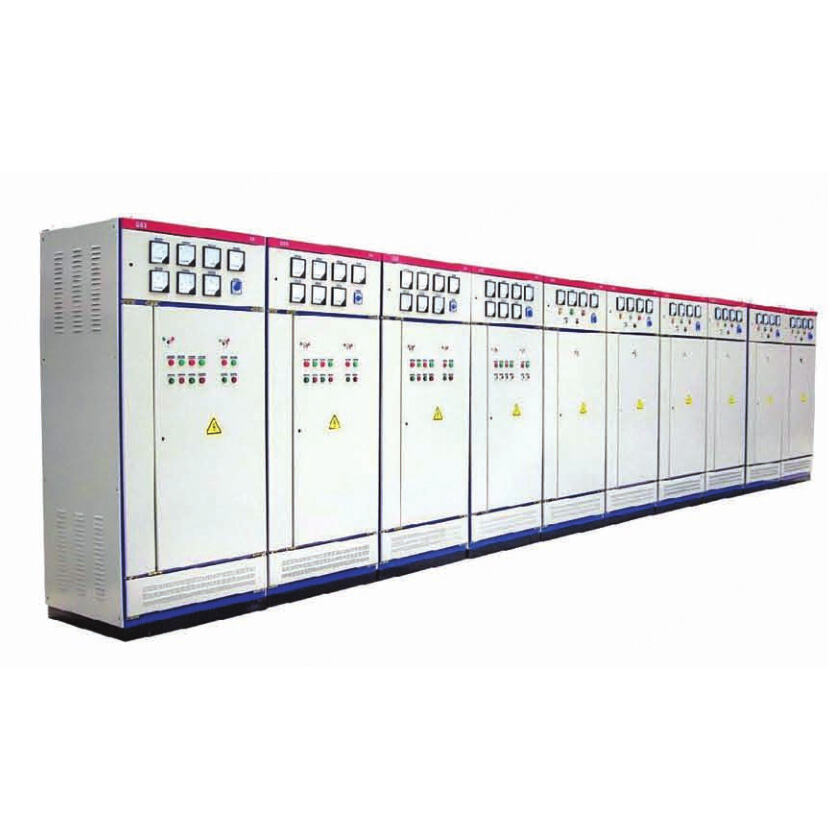
Environmental safety and endurance at the factory floor testing Zone at continuous duty IL MCCB automatic circuit breaker with UL 489 and IEC 60947- 2
In factory environments, molded case circuit breakers (MCCBs) must be UL 489 and IEC 60947-2 certified for compliance and effective functionality. Such environments require MCCBs designed for continuous duty operational service at full load. Such environments require MCCBs designed for continuous duty operational service at full load. For such environments, manufacturers design MCCBs for full load continuous duty operational service. This is done by conducting thermal tests designed for over 6000 operational duty cycles. To withstand harsh manufacturing conditions, MCCB manufacturers conduct salt, humidity, and vibration testing of the MCCB to simulate the real factory floor conditions. Performance at extreme environmental conditions is often required with optimum functionality maintained at -25'C and +70'C. Compliance with safety regulations is equally important. In compliance with IEC TR 61912-2 standards, MCCBs must be able to interrupt fault current within 3 to 8 milliseconds during an arc flash explosion.
Satisfying all these criteria means that MCCBs can cope with typical challenges in factories, such as the accumulation of conductive dust and exposure to chemicals of different natures, without disrupting the protective coordination system that protects the equipment.
Strategic Positioning of MCCB in Factory Power Distribution Architecture
Molded case circuit breakers (MCCBs) are irreplaceable and strategically positioned, both while protecting industrial power systems, and while the system is still growing, keeping all systems operational. They are used on main feeders of 100 to 2,500 amps as well as on demand-heavy breakers, where regular mini circuit breakers are not not up to the task. Their distinct feature is the DIN rail mounting option, allowing them to be installed in motor control panels and switchgear. Such MCCBs are preferred as in the case of factories, every inch of space is vital. This arrangement is the result of enhanced safety standards and protection layers, and in case of a fault, only large MCCB breakers will be isolation faulting active zones, while local circuit remaining nearby is managed separately by small local devices. Cost savings as a result of elimination of downtime quickly rack up, illustrating the economic advantage of the power protection devices sponed Matched Structural Systems (MSSs), providing manufacturers with circa 740k/year, per last year's Ponemon Institute study. Additional features on recent units include remote energy use monitoring by technicians and anomalous energy use, prior to fault occurring.
MCCBs have evolved to assist with the proficient management of electrical grids, rather than just being used as safety switches. Using these tools at various points in a system's operational grid structure will allow the system to adapt to a number of operational pressures found in industrial fields such as sudden starting of motors, welding, and switching cycles in HVAC units. Older technologies are unable to adapt to these changes as MCCBs are.
FAQ
What are the benefits of MCCBs in industrial applications?
MCCBs have a combination of benefits such as a high breaking/carrying capacity, thermal-magnetic tripping (reusable) for protection, adaptative protection with adjustable settings for protection, fault isolation with selective coordination, and industrial standards.
In which way can the MCCBs mitigate the problem of nuisance tripping?
MCCBs can mitigate nuisance tripping through adjustable trip settings which will allow for toleration of temporary pulses such as motor or welding pulses while still maintaining protection from faults.
What must the MCCBs have regards to standards and certifications for them to be used in factories/factories?
The MCCBs must be IEC 60947-2 and UL 489 certified in order to ensure that the MCCBs meet the standards of a) working continuously in operational environments and b) that the MCCBs meet the standards that are required for the factories operational environments.
In which way does an MCCB contribute to minimizing downtime?
MCCBs contribute to minimizing downtime through selective coordination which only interrupts the affected portion of the circuit and maintains upstream continuity while allowing for a rapid indication of the fault.