 EN
EN

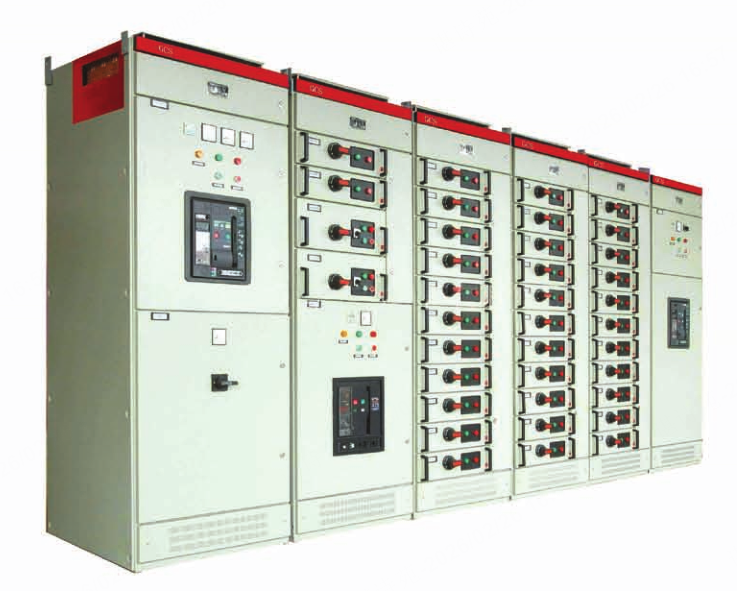
The Physics Behind Arc Extinction in Modern Medium-Voltage Switchgear
When a fault current surges through a power distribution network, the speed at which the protective device interrupts that current determines whether downstream equipment survives or sustains permanent damage. In medium-voltage applications ranging from 3.6 kV to 40.5 kV, the vacuum circuit breaker has become the dominant choice precisely because of one defining capability: it can extinguish an electrical arc within microseconds of contact separation.
The arc quenching mechanism inside a vacuum interrupter operates on principles fundamentally different from older oil-filled or SF6 gas-based breakers. When the contacts separate under load, the current ionizes metal vapor from the contact surfaces, creating a conductive plasma column. In a vacuum environment, however, the mean free path of charged particles is measured in meters rather than nanometers — once the current wave passes through its natural zero crossing, the plasma loses its conductive medium almost instantly. Within 10 to 15 microseconds after current zero, the dielectric strength of the vacuum gap recovers faster than the transient recovery voltage can rise, preventing re-ignition.
Contact Materials and Their Role in Interruption
Why Copper-Chromium Alloys Dominate Vacuum Interrupter Design
The choice of contact material directly governs interruption performance. Most modern vacuum interrupter contacts use a copper-chromium (CuCr) alloy, typically with 25% to 40% chromium content. This material combination serves three purposes: chromium provides high gettering action, absorbing residual gas molecules that could degrade vacuum quality over a 20-to-30-year service life; copper supplies excellent electrical and thermal conductivity to manage continuous current ratings from 630 A to 3150 A; and the alloy's grain structure produces fine, evenly distributed arc roots that prevent localized overheating.
Alternative materials like copper-bismuth and copper-tungsten exist for specialized applications, but CuCr remains the standard because it delivers the best trade-off between arc erosion resistance and current chopping behavior — critical for applications where low overvoltage characteristics matter.
The Role of Contact Geometry in Arc Control
Beyond material selection, contact geometry shapes how the arc behaves. Spiral-petal contacts and axial magnetic field (AMF) contacts represent two common approaches. AMF contacts generate a magnetic field parallel to the arc column, forcing the arc to diffuse across a wider surface area rather than concentrating at a single point. This diffusion reduces local contact temperature from potentially 20,000 K at the arc root to a more manageable distribution, dramatically lowering contact erosion rates.
A Practical Case From a Southeast Asian Industrial Park
A textile manufacturing facility in Vietnam operating over 200 motor-driven looms experienced repeated nuisance tripping on its aging oil circuit breakers. The frequent short-circuit events — common in environments with high motor inrush currents — degraded the insulating oil, requiring quarterly maintenance shutdowns. Each shutdown cost approximately 8 to 12 hours of lost production.
The facility's engineering team, working with Xiamen Hongxin Intelligent Technology, replaced the oil breakers with KYN28-12 indoor metal-clad withdrawable vacuum circuit breaker assemblies rated at 1250 A with a 31.5 kA short-circuit breaking capacity. The vacuum interrupters eliminated all oil-related maintenance. Over 18 months of operation, the vacuum interrupters handled 14 fault events without a single failure to interrupt or restrike. Arc extinction time, measured via oscillography, consistently fell below 15 milliseconds from contact parting to final current zero.
Selection Criteria for Reliable Arc Interruption Performance
Matching Rated Short-Circuit Breaking Capacity to System Requirements
A vacuum circuit breaker must have a rated short-circuit breaking capacity (Isc) that exceeds the maximum prospective fault current at its installation point. IEC 62271-100 classifies breakers into E1 (basic electrical endurance), E2 (extended electrical endurance), C1 (low probability of restrike), and C2 (very low probability of restrike) classes. For installations serving critical processes, specifying E2 and C2 class devices provides an additional safety margin — these classifications verify that the interrupter can handle its full rated breaking current multiple times without restrike.
Vacuum Integrity Monitoring as a Preventive Practice
Vacuum interrupters are sealed-for-life devices, but vacuum quality can degrade due to microscopic leaks or slow outgassing. Modern diagnostic techniques include the magnetron gauge method and high-voltage AC withstand testing between open contacts. A healthy interrupter at rated voltage withstands the test voltage with zero leakage current — any measurable current flow suggests gas ingress and reduced dielectric strength, warranting replacement before a failure occurs.
Regular visual inspection of the interrupter envelope for cracks or impact damage complements electrical testing. Contact erosion indicators, when provided, show remaining contact stroke margin.
Frequently Asked Questions
What makes vacuum superior to SF6 for arc extinction?
Vacuum interrupters achieve dielectric recovery approximately 10 times faster than SF6 after current zero because the vacuum environment contains no gas molecules that need de-ionization. This means vacuum technology handles high-frequency transient recovery voltages more effectively while eliminating greenhouse gas concerns, since SF6 has a global warming potential 23,500 times that of CO₂.
How long does a vacuum circuit breaker interrupter last?
A well-maintained vacuum interrupter typically serves 20 to 30 years without major intervention. Mechanical endurance for the operating mechanism exceeds 10,000 close-open cycles per IEC 62271-100. Electrical endurance at rated short-circuit current ranges from 30 to 100 full fault interruptions depending on design and rating. Hongxin Intelligent Technology vacuum interrupter assemblies follow these IEC endurance classifications.
Can vacuum circuit breakers handle capacitive switching?
Yes, when properly specified. Capacitive switching — common in capacitor bank and cable charging applications — requires a breaker rated for low restrike probability (Class C2 per IEC 62271-100). The vacuum interrupter's rapid dielectric recovery makes it inherently suitable, but contact material and design must be optimized to minimize inrush current pre-strike effects.
What is the typical arc extinction time in a vacuum interrupter?
Arc extinction typically completes within 8 to 15 milliseconds after contact separation, depending on the fault current magnitude and the point-on-wave at which separation begins. The arc burns until the next natural current zero, at which point the vacuum gap regains its full dielectric strength almost instantly.
What maintenance does a vacuum interrupter require?
Vacuum interrupters require minimal maintenance compared to oil or SF6 alternatives. Annual visual inspections of the ceramic envelope, contact erosion checks using built-in wear indicators, and dielectric integrity testing at 80% of rated power-frequency withstand voltage form the standard inspection protocol. No gas refilling or oil replacement is needed.
Does altitude affect vacuum circuit breaker performance?
No — a key advantage. Unlike air-insulated or SF6 breakers whose dielectric strength degrades at high altitude due to lower air density, vacuum interrupters maintain identical performance at any altitude because vacuum dielectric properties are independent of external atmospheric pressure. This makes vacuum technology preferred for installations in mountainous regions.