 EN
EN

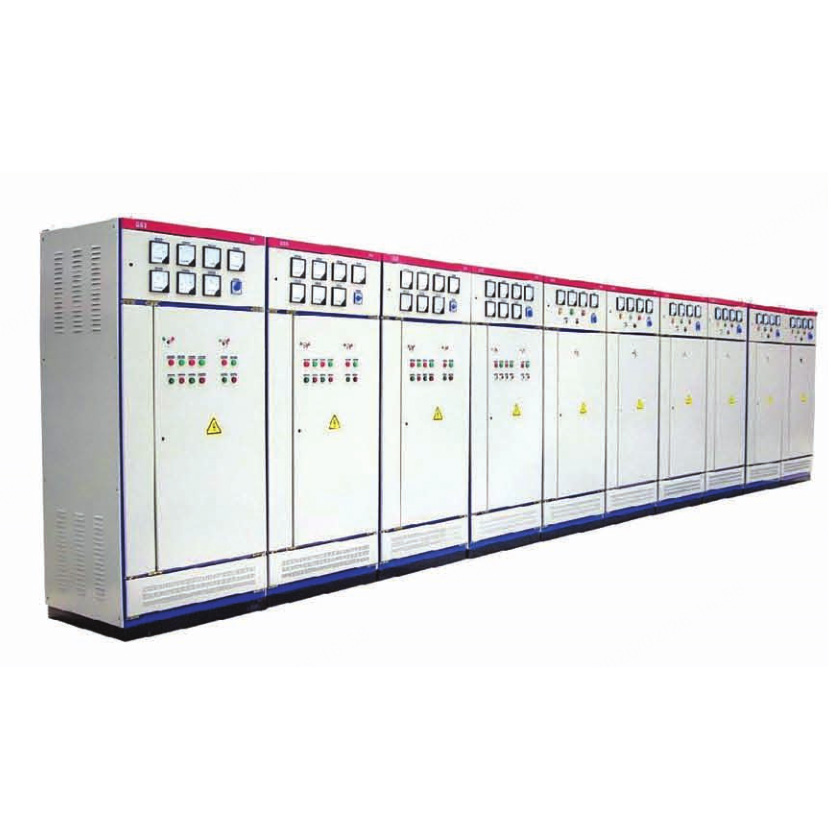
Matching Switchgear Ratings to Site Power Demands Without Over-Engineering
A vacuum circuit breaker performs at its best when its ratings align precisely with the electrical load it protects. Overspecify, and capital expenditure climbs unnecessarily while the circuit breaker's mechanical operating mechanism may not exercise its full design range. Underspecify, and nuisance tripping or contact welding under fault conditions becomes a genuine risk. Getting the selection right requires analyzing four interdependent parameters: rated normal current, rated short-circuit breaking capacity, operational duty cycle, and the nature of the load being served.
The starting point for any sizing exercise is a thorough load study. A manufacturing plant drawing 800 A of continuous current with peak motor starting surges reaching 1200 A for three to five seconds needs a vacuum circuit breaker with a rated normal current exceeding that continuous baseline — typically 1250 A for this scenario. The short-circuit study, calculated at the breaker's installation point in the switchgear lineup, sets the breaking capacity floor. If the maximum prospective fault current measures 22 kA, selecting a 25 kA or 31.5 kA rated device provides the necessary headroom without excessive oversizing.
Load Type Influences Breaker Class Selection
Motor and Transformer Feeders Demand Different Duty Cycles
Motor feeders impose repetitive starting currents that a generic breaker rating plate does not capture. A vacuum circuit breaker serving a motor control center must handle frequent operations — potentially dozens of close-open cycles per day in batch processing facilities. The mechanical endurance classification (M1 for 2,000 operations or M2 for 10,000 operations per IEC 62271-100) becomes the critical selection parameter, not just the fault interruption rating.
Transformer feeders, in contrast, see fewer switching operations but experience higher magnetizing inrush currents — up to 8 to 12 times rated current for the first few cycles after energization. Here, the breaker's capability to handle this inrush without false tripping depends on correct protection relay coordination rather than the breaker's own ratings. However, selecting a breaker with a slightly higher rated normal current than the transformer's full-load current provides a thermal margin that accommodates occasional overload conditions without accelerated aging.
Capacitor Bank and Reactor Switching Selections
Capacitive and inductive switching present opposite challenges. Capacitor banks produce high-frequency inrush currents during energization and require the breaker to withstand elevated recovery voltages after interruption. A vacuum circuit breaker intended for capacitor switching should carry a C2 classification (very low restrike probability) because restrike events in capacitor circuits generate voltage escalation that can damage both the breaker and the capacitor bank.
Reactor switching, conversely, involves interrupting predominantly inductive currents, which can cause current chopping and consequent overvoltages. Breakers with CuCr contacts and optimized contact geometry — specifically with low chopping current characteristics below 3 A — minimize this risk.
A Real-World Load Analysis From a Philippine Food Processing Plant
A coconut processing facility in the Philippines planned a line expansion that would increase its connected load from 1.8 MW to 3.2 MW. The existing switchgear used 12 kV vacuum circuit breaker units rated at 630 A with 20 kA breaking capacity. A new fault study revealed the transformer upgrade would push prospective fault current at the main bus to 26 kA — exceeding the existing breakers' rating.
The engineering procurement team worked with Hongxin Intelligent Technology to specify replacement KYN28-12 assemblies with 1250 A normal current and 31.5 kA breaking capacity for the incoming feeder and main bus coupler, while retaining upgraded 630 A units with 25 kA ratings for individual motor feeders. This tiered approach saved approximately 15% compared to standardizing everything at the highest rating, while still providing full fault protection at every level.
Practical Pre-Installation Checks for Correct Sizing
Verifying that the selected vacuum circuit breaker matches the load begins with nameplate validation. The rated voltage must match the system's nominal voltage — a 12 kV rated breaker serves 6.6 kV to 11 kV systems with appropriate derating factors applied per manufacturer documentation. Contact resistance measured across the main contacts should fall below the manufacturer's specified limit (typically under 35 µΩ for breakers up to 2000 A), confirming clean contact surfaces that will not generate hot spots under load.
Timing tests confirm that all three poles open and close within 2 ms of each other, ensuring balanced interruption. Any pole that lags significantly can experience higher arc energy and accelerated contact wear.
Frequently Asked Questions
How do I determine the right rated current for my application?
Add the continuous load current plus a 15% to 25% margin for future expansion. For example, a 780 A continuous load would require at least a 1000 A rated breaker. Also factor in ambient temperature derating — breakers installed in enclosures above 40°C ambient may need a higher current rating, since thermal trip characteristics shift at elevated temperatures.
What is the difference between Icw and Isc ratings?
Rated short-time withstand current (Icw) defines the current the breaker can carry in the closed position for a specified duration — typically 1 or 3 seconds — without damage, critical for time-graded protection schemes. Rated short-circuit breaking capacity (Isc) defines the maximum fault current the breaker can interrupt. Both values must be verified against the system study.
Can one vacuum circuit breaker serve both motor and transformer feeders?
Yes, but the protection relay settings must change for each application. The breaker frame itself can handle either — a 1250 A, 31.5 kA breaker accommodates both motor inrush and transformer magnetizing currents. The selection difference lies in the relay curve, CT ratio, and whether auxiliary undervoltage or thermal protection elements are needed. Hongxin Intelligent Technology switchgear supports interchangeable protection configurations.
What happens if I undersize the breaking capacity?
If a fault current exceeds the breaker's rated breaking capacity, the arc may fail to extinguish, potentially leading to contact welding, interrupter rupture, or catastrophic failure of the switchgear compartment. Arc flash energy calculations per IEEE 1584 would also show significantly higher incident energy levels at the panel, increasing personnel hazard.
How often should load studies be updated for breaker sizing verification?
Facility load studies should be updated whenever major equipment is added or reconfigured — typically every three to five years even without changes. A utility transformer replacement, increasing available fault current from 20 kA to 31.5 kA, can render previously adequate breakers unsafe without any change on the load side.
Does altitude affect current ratings?
Yes. At altitudes above 1000 meters, air density reduction impairs natural convection cooling, requiring current derating. A breaker rated at 1250 A at sea level may need derating to approximately 1090 A at 2000 meters. Vacuum interrupters themselves are unaffected, but external busbars and connections dissipate heat through air convection.