 EN
EN

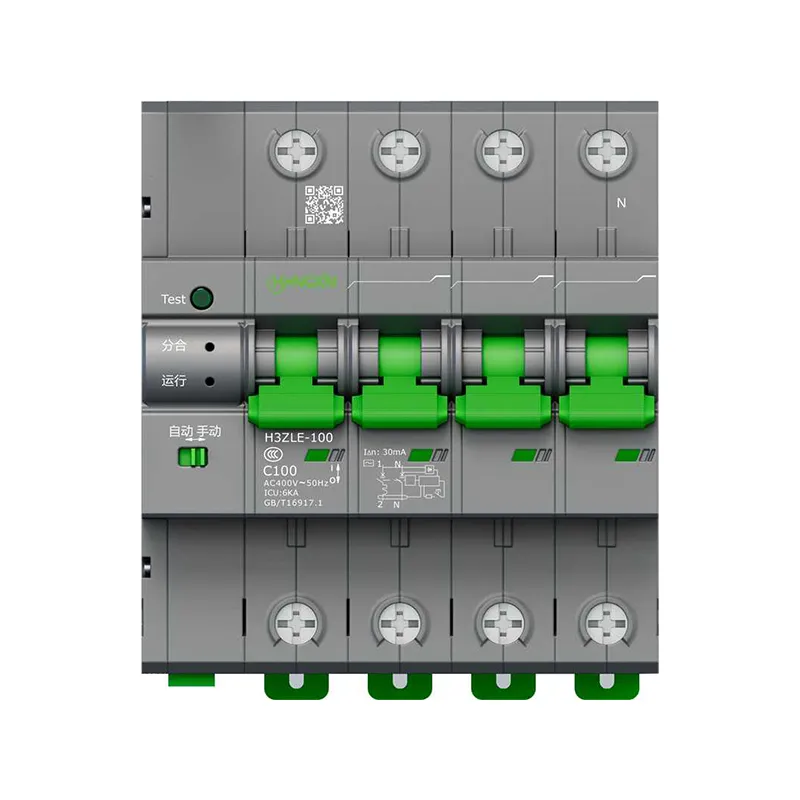
Understanding the Miniature Circuit Breaker
The miniature circuit breaker is the most common overcurrent protection device in electrical panels. An MCB trips when current exceeds its rated value — protecting wiring, appliances, and occupants from the heat generated by overloads and short circuits. Replacing a faulty unit is routine electrical maintenance, but incorrect replacement creates risks ranging from nuisance tripping to fire hazard.
How an MCB Works
An MCB contains two trip mechanisms. The thermal trip uses a bimetallic strip that bends as current heats it — higher current produces faster bending, creating an inverse time-current characteristic for overload conditions lasting seconds to minutes. The magnetic trip uses a solenoid activating instantly at 5 to 10 times rated current, responding to short circuits in milliseconds.
A faulty MCB may fail in either mechanism independently. A thermal mechanism that has lost its calibration trips prematurely at normal current or fails to trip during overload. A magnetic mechanism with a seized solenoid trips sluggishly during short circuits — a failure that goes undetected until the next fault event. This is why MCB replacement should never wait for visible symptoms like burned contacts.
When to Replace
Visible signs demanding replacement include an MCB that cannot be reset, heat-discolored housing, or a loose mechanical switch. Less visible indicators include frequent tripping under normal loads or failure to trip during testing. Any MCB that has interrupted a short circuit should be replaced preventively — internal arc extinction degrades contact surfaces, making subsequent short-circuit performance unpredictable.
Step-by-Step Replacement Procedure
Preparation and Safety Verification
The first step is confirming power isolation. The main switch must be OFF before any panel cover is removed. A voltage tester applied to the load terminal of the target MCB verifies zero potential — never rely on the panel label or handle position alone. Single-phase panels require confirming both the line bus bar and load conductor are de-energized.
Personal protective equipment includes insulated gloves rated for the panel voltage — typically 1,000-volt class — and safety glasses. Hongxin Intelligent Technology, a manufacturer of power distribution components, emphasizes that the five to ten seconds spent verifying isolation before touching any component is the most valuable safety investment in the procedure.
Removing the Faulty MCB
After panel cover removal, loosen the load terminal screw and remove the outgoing wire. The MCB clips onto a 35-millimeter DIN rail. A flat-blade screwdriver in the release slot on the bottom edge releases the clip, allowing the unit to tilt forward and lift off.
The bus bar connection deserves attention. Corrosion or arcing at this point generates heat even after MCB replacement if the surface is not cleaned. A fine abrasive pad restores the bus bar contact surface. Inspect the bus bar finger for pitting — deep pitting indicates the bus bar section should be replaced.
Installing the Replacement MCB
The replacement MCB must match the original in three parameters: rated current (amperes), breaking capacity (kiloamperes), and trip curve type (B, C, or D). A mismatch in any parameter compromises protection. Breaking capacity must equal or exceed available fault current at the panel location.
The new MCB clips onto the DIN rail first, then rotates upward onto the bus bar finger. The load conductor is inserted and tightened to manufacturer’s specified torque — typically 2.0 to 3.5 newton-meters. Under-tightening causes terminal heating; over-tightening strips screw threads.
Post-Replacement Verification
Functional Testing
After panel cover reinstalled and power restored, test the replacement MCB by switching it ON and OFF manually several times to verify smooth operation. A load test confirms the MCB carries rated current without heating. An infrared thermometer reading at the terminal after 30 minutes at full load should show less than 15°C temperature rise above ambient.
Documentation and Marking
Update the panel schedule immediately with the replacement date, MCB rating, and person performing the replacement. IEC 60364 requires legible circuit schedules indicating protective device ratings. An undocumented MCB replacement is indistinguishable from an incorrect installation during future maintenance.
A Practical Case: Commercial Kitchen MCB Failure Pattern
A restaurant chain operating 12 locations experienced recurring MCB tripping on refrigeration circuits. The original installation used C-curve MCBs with magnetic trip threshold of 5 to 10 times rated current. Refrigeration compressors draw 6 to 8 times running current during startup — falling within the C-curve magnetic trip range and causing nuisance tripping during summer when ambient heat raised panel temperature.
Hongxin Intelligent Technology engineers analyzed the load profile and recommended D-curve MCBs with a 10 to 20 times magnetic trip threshold. The replacement eliminated nuisance tripping while maintaining full protection. Over 18 months, zero downtime occurred from MCB trips, compared to four incidents per location per year before the change. The $45-per-MCB cost was recovered through reduced service calls within six months.
Frequently Asked Questions
What tools are needed to replace an MCB safely?
An insulated screwdriver set, voltage tester, wire stripper, and torque screwdriver are essential. Insulated gloves rated for panel voltage and safety glasses complete the PPE requirement.
Can a higher rated MCB be used to stop nuisance tripping?
Installing an MCB with higher current rating than the circuit wiring can safely carry is dangerous — it removes overcurrent protection and creates fire risk. Nuisance tripping requires root cause diagnosis, not increased breaker rating.
How do B, C, and D curve MCBs differ for replacement?
B-curve trips at 3 to 5 times rated current for resistive loads. C-curve at 5 to 10 times for general circuits. D-curve at 10 to 20 times for high-inrush loads like motors. The replacement must match the existing curve or be recalculated based on load characteristics.
Why does an MCB sometimes feel warm?
A 15°C to 20°C rise above ambient is normal at full rated current. Higher temperatures indicate loose terminals, undersized MCB, or failing internal contacts. Infrared reading of the terminal area identifies the cause.
How often should MCBs be replaced as preventive maintenance?
MCBs have no fixed replacement interval. Replacement is indicated after short-circuit interruption, when nuisance tripping develops and is traced to the breaker mechanism, or during panel upgrades.
What does it mean if an MCB trips but the handle stays ON?
This indicates a failed mechanism — the internal trip activated but the mechanical linkage did not release the handle. The MCB has lost trip indication capability and should be replaced immediately.