 EN
EN

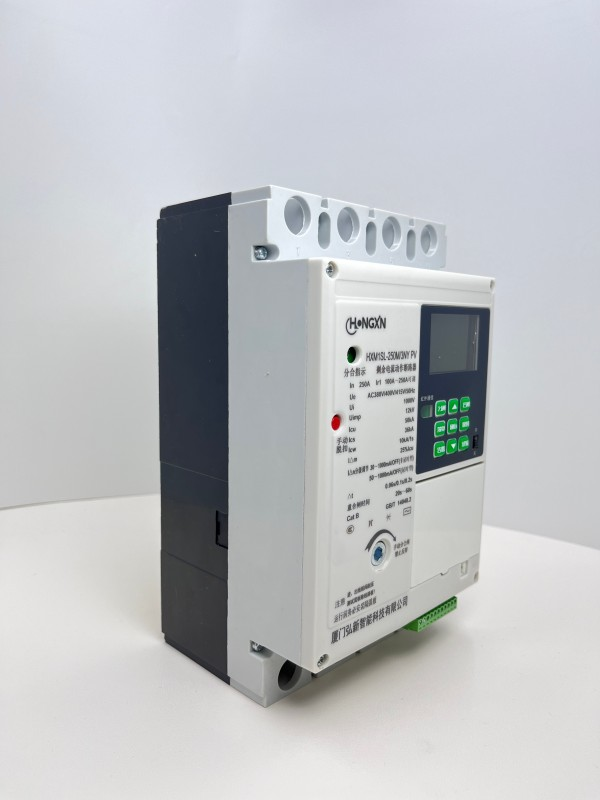
Current Rating and Interrupting Capacity: What Sets An MCCB Apart
Current Rating And Range Comparision: MCB = 0.5 – 125A | MCCB = 10 – 2500A
Miniature circuit breakers (MCB) are built for lower current applications, typically in the range of 0.5 amps to 125 amps. They have become the preferred method of protecting home and small business applications for circuit wiring, lighting, plug, and kitchen appliance circuits. Molded case circuit breakers (MCCB) however, deal with much larger current applications. They manage current levels from 10 amps right up to 2500 amps. This makes them a requirement for use in challenging industrial scenarios where machinery consumes large quantities of energy. Think about large electrical feeds in the factory, large machine transformers, or any situation where there is a large overload and heat risk. The design and construction of the circuit breakers must be robust enough to be uncompromising. From a design standpoint, MCCB solutions are preferred for loads over 125 amps or in scenarios when MCBs do not suffice in terms of the needed protection and the situation demands something more.
Closing the Breaking Capacity Gap: Why MCCBs Handle Higher Fault Currents (15-150 kA vs 6-10 kA)
The breaking capacity is the measure of the maximum amount of fault current a breaker can withstand before the breaker fails, and this is what sets the different types apart. Miniature Circuit Breakers (MCBs) have a breaking capacity of 6 to 10 kiloamperes which works fine for home applications since the electrical system in the home is not too complicated. However, this becomes a lot more complicated in an industrial setting. Industrial facilities have large transformers and numerous complex high current wiring systems which produce high levels of fault current. Motor Circuit Breakers (MCCB) have a breaking capacity range of 15 to 150 kA. What is illustrative here is what actually happens during a fault: in a 50 kA fault in a motor control panel, standard MCBs would literally explode, while properly designed industrial MCCBs would fault and surge without any issues. This type of design is robust enough to eliminate arcing, preserve the integrity of the engineered equipment, and preserve the continuous operation of the electrical system. For industrial facilities, this is not just optional; it is absolutely necessary. This type of design is robust enough to eliminate arcing, preserve the integrity of the engineered equipment, and preserve the continuous operation of the electrical system. For industrial facilities, this is not just optional; it is absolutely necessary.
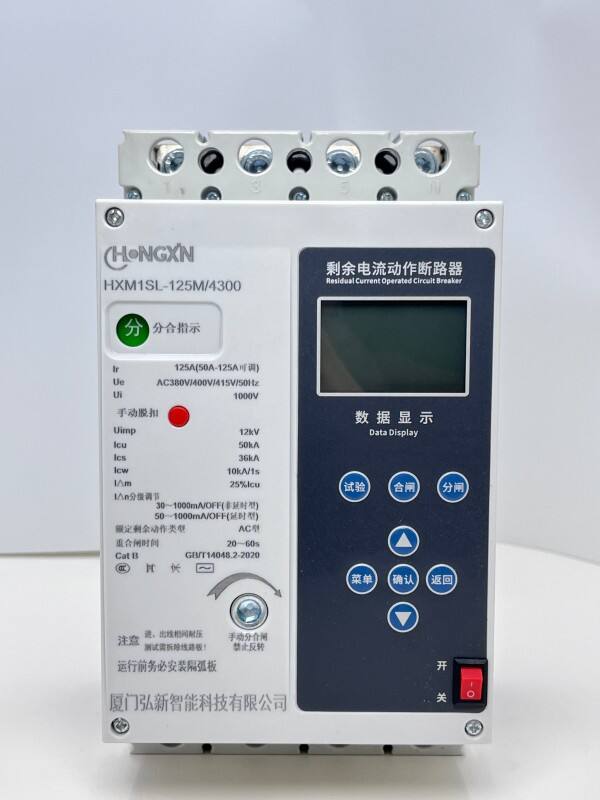
MCCB Setting Flexibility: Fixed vs Adjustable
The operational goals of the MCBs and the MCCB's electrical protection systems remain the same; that is, to have a balance between fault isolation and protection of system components to allow continuous operation of the system. MCBs are designed to have a single, factory preset, fixed, thermal magnetic trip curve, which is ideal for the design of a simple, low-complexity system. In contrast, MCCBs allow for full adjustability of long time, short time and instantaneous trip settings to provide the operational goals of precise coordination of complex and hierarchical industrial power system networks.
MCB's Fixed Thermal-Magnetic Setting (B/C/D Types) for Predictable Low-Energy Tripping
Miniature Circuit Breakers have internal tripping mechanisms referred to as B, C, and D curves. The B type trips when current reaches three to five times the rated current, which is ideal for use in standard lighting circuits. The C type is more suited for use in offices and for heating systems, as it can cope with brief surges of current of up to 10 times the rated current. The D curve is required for motors which have large starting currents, as it can cope with 20 times the rated current. The specific parameters of the three types of MCBs provide dependable and cost-effective circuit protection in applications with consistent and predictable electrical load behaviour and no complex coordination of multiple protective devices needed.
MCCB's Adjustable Long Time, Short Time, and Instantaneous Trip Settings for Exact Coordination
MCCBs have three protection bands that can be configured independently:
Long time: Adjustable pickup (80–120% of rating) and time delay for sustained overloads
Short time: Adjustable delay (0.05–0.5 s) and pickup for selective coordination with downstream devices
Instantaneous: trip for short-circuit isolation that can be either adjustable or fixed for high current isolation
Because of the extensive customization available, these systems can be set optimally for the behavior of specific equipment such as the inrush current of transformers or the transients of motor starts. This helps in eliminating annoying false trips while still retaining selective coordination. When an event occurs, the fault isolation is done only at the nearest problem area. In new MCCB models, digital trip units with communication ports are standard. This gives operators the ability to adjust parameters dynamically to respond to load variations during different operating conditions.
Use Case and Role in the System: When to Choose an MCCB Over an MCB
Choosing between MCBs and MCCBs is based on the overall dimension of the system, exposure to fault conditions, and need for coordination. Under low risk, low current conditions, MCBs are preferred for final branch circuits, while MCCBs are critical where the system's performance, adjustability, and fault tolerance are defining characteristics.
MCB Use Cases: Final Branch Circuits in Residential and Light Commercial Installations
MCB end-of-line protection extends to households, professional offices, and small retail businesses. They protect >125A lighting and appliance circuits, general-purpose receptacles, and subsidized appliance circuits. Fixed B/C/D trip units are designed for protection and simplicity (financially), and provide protection for overloads and short circuits where fault current is expected to be <10 kA and where no fault current selective coordination is necessary.
MCCB Use Cases: Main Feeders, Transformer Secondaries, Motor Control Centers, and Industrial Switchboards
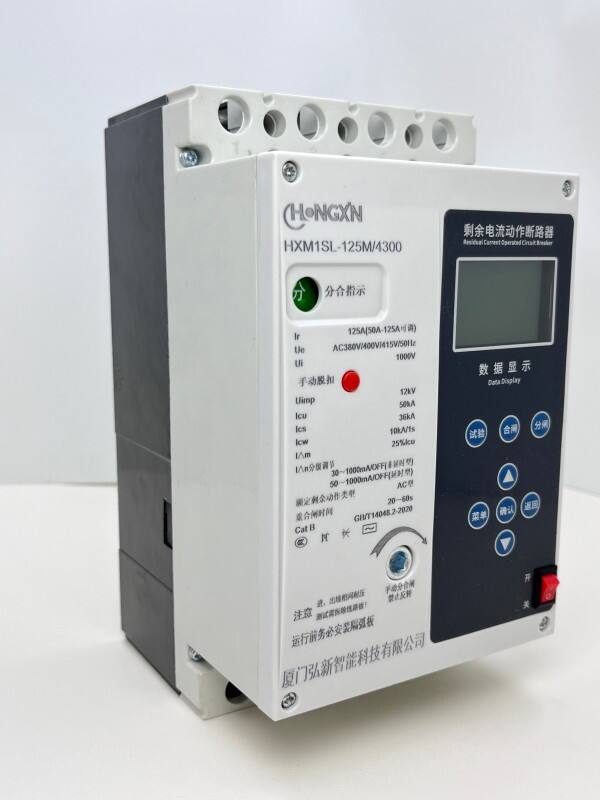
MCCBs are considered the core components for the industrial power distribution system where they provide protection to:
- Main distribution feeder, generally up to 2500A
- Transformer secondaries where large inrush currents require short-time delay adjustment
- Motor control centers (MCCs) where adjustable short time delays mitigate nuisance tripping during motor control starts, and
- Industrial switchboards, which must be designed to withstand fault currents up to 150kA.
MCCB protection is designed to withstand harsh environments (including chemical plants and mining operations) by having a rugged construction in support of reliable operational protection of adjustable trip units to maximize operational downtime in the manufacturing and data center environments.
Physical Design, Mounting, and Smart Integration: MCCB Advantages for Modern B2B Infrastructure
MCCBs are constructed of reinforced molded case and vibration-resistant materials, resulting in greater durability than that of MCBs, in industrial motor control centers (MCCs) and switchboards. Their modular construction allows for a variety of design configurations and construction designs (including fixed, plug-in, or draw-out) to be compatible with various panel designs and maintenance requirements.
Modern MCCBs have made drastic advancements in features compared to their predecessors. Originally, MCCBs had one purpose, safety. New iterations of MCCBs possess features including internal current measurements, temperature measurements, and include communication protocol modules. These modules allow MCCBs to communicate and collect real-time data, have remote access capabilities, and local or remote maintenance notifications. The Ponemon Institute recently published a report on losses a business may encounter due to unexpected shutdowns. The report concluded that average business losses due to unplanned shutdowns is approximately $740,000/hour. With reports like these, intelligent MCCBs must be viewed not solely as safety MCCBs, but as ways to cut costs while increasing efficiency in real-time MCCB equipped factories.
FAQ
What is the difference between an MCCB and an MCB?
The difference is primarily in the current load and fault level that each type is designed to handle. MCCBs are designed to handle larger current loads (10–2500A) and higher fault levels (15–150 kA) than an MCB. Because of this, MCCBs are designed for industrial applications while MCBs are designed for lower current, residential, or light commercial applications.
When should you choose an MCCB instead of an MCB?
MCCBs are preferred for industrial applications where there is a need for handling high current and fault levels in a more robust manner, along with the need for coordination and adjustable protection levels. MCBs are more suited for use on the final branch circuits in residential and light commercial applications.
What are MCCBs typically used for?
MCCBs are used for main distribution feeders, transformer secondaries, motor control centers, and industrial switchboards— where powerful protection is needed, and bespoke settings are a requirement.
Why is adjustability a requirement in MCCBs?
This is because adjustable protection in MCCBs means that the user is able to make accurate settings for protection in line with the equipment being used, the industrial power system integration, and is able to eliminate the problem of operational down time due to nuisance tripping.