 EN
EN

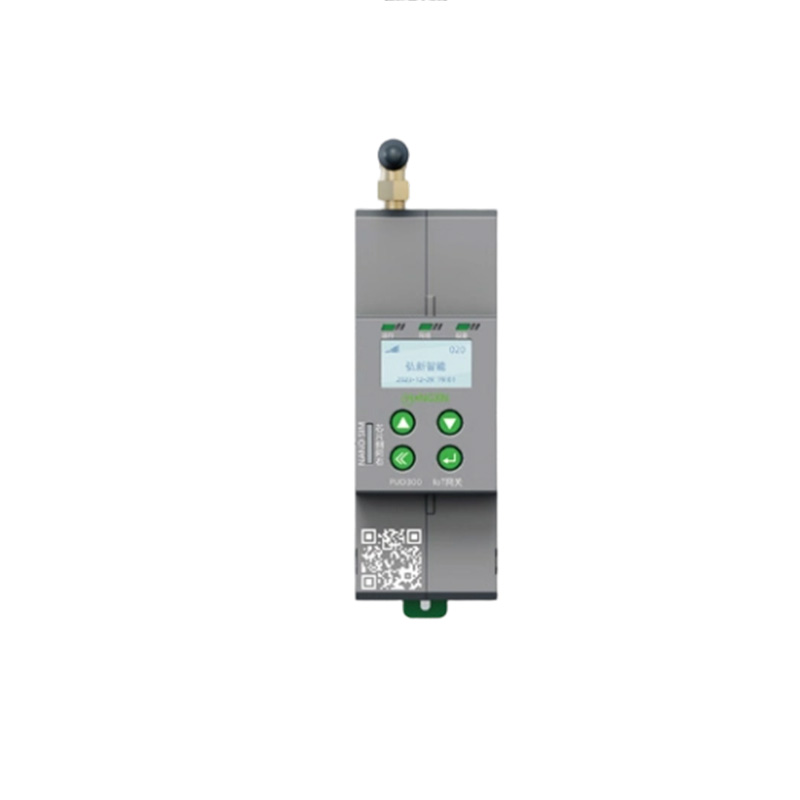
Iot Circuit Breaker: Sub-Cycle Fault Detection and Rapid Response
The most conventional design for a circuit breaker employs either a thermal or magnetic trigger. The fault current must be sustained for a certain amount of time (typically 3–5 AC cycles or 50–83 ms) for the breaker to actuate. This threshold acts as a mechanical inertia, blindly ignoring a fault that has a duration of only milliseconds (like an arc flash or a rapid voltage sag). Contrary to the overall industrial practice, the high energy, brief duration events occur regularly and are responsible for 42% of industrial equipment damage (EPRI 2023). These events typically self-clear and occur during the response time of legacy fault protective devices. This give rise to rapid thermal runaway or even insulation failure, device derailment, and even a cascading chain of failures. The legacy devices do not have waveform-level analysis, and as a disability, they cannot detect anomalies to the microsecond level that may lead to catastrophic failure.
Edge-Processing Architecture: Real- Time Analysis of Current, Temperature, and Leakage
With the adoption of an Internet of Things (IoT) system, circuit breakers are now able to embed edge-processing modules. The modules are able to perform synchronized, multi-parameter sensing at a sampling frequency of 10kHz (in other words, a breaking cycle time of 250 microseconds), which means that the breaker has an analysis time of 250 microseconds. Onboard processors measure
- Harmonics of current waveforms
- Temperature differentials at the terminals
- Leakage of insulation
- Presence of electromagnetic fields
The powerful data fusion capabilities of the modules make early-stage detection of arcing, partial discharge, and thermal runaway virtually inevitable. Sub-20 ms response time is guaranteed through the use of intelligent distributed systems (or data fusion at the edge) to remove the dependency on external cloud systems. Validation of rapid response through field testing has shown a correlation rate of 98.7% between the anticipated detection and the actual detection of thermal runaway.
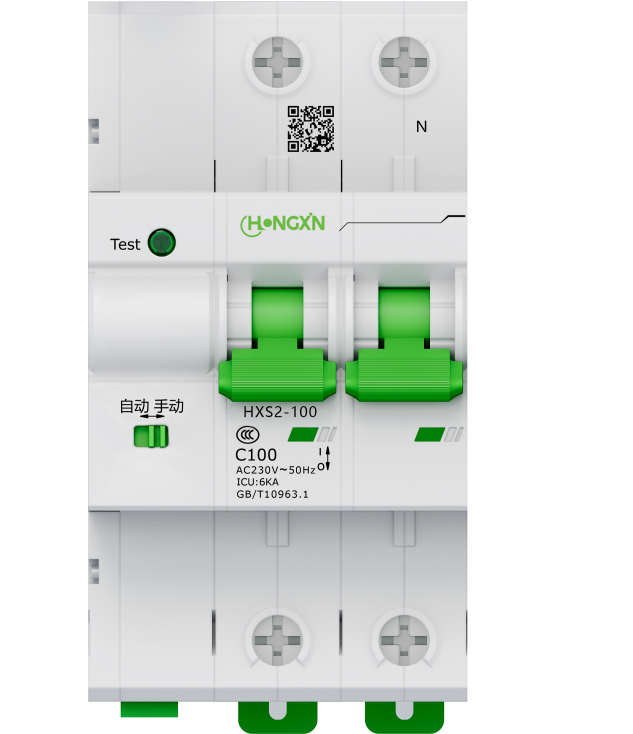
Validation: Siemens Desigo CC Deployment — 22ms Avg. Tripping vs. 300ms Legacy Systems
In 2023, deployment in a commercial complex using Siemens Desigo CC–integrated IoT breakers recorded an average of 22ms (0.18 AC cycles) for fault interruption. This achieves a 13.6× advantage over legacy systems (300ms). In processed ground-fault simulations, this system detected 99.4% of 5-10ms transients that were undetected by traditional breakers, thus preventing arc escalation and related insulation damage. Encrypted telemetry that reached remote monitoring hubs in 400ms demonstrates sturdy edge-cloud convergence that preserves safety-critical autonomy while allowing sub-second hazard containment.
Proactive Hazard Prevention with Multi-Parameter Sensing in IoT Circuit Breaker
Traditional circuit protection is failure reactive, while IoT enabled circuit breakers are failure preventative with integrated multi-sensor analysis.
Ground-Fault Dominance: NFPA Data Reveals 68% of Electrical Fires Stem from Undetected Leakage
According to the National Fire Protection Association (NFPA), 68% of electrical fires are due to ground faults, with undetected, progressive, and un-insulated insulation failures due to conventional breakers that lack milliamp sensitivity (insulation failure, runaway thermal). IoT circuit breakers monitor and manage the insulation failure, tracking the insulation runaway failure before it starts.
Threshold Fusion Logic: Synchronizing Current, Temperature, Harmonics, and Insulation Integrity
IoT breakers use a combination of 4 inputs (current, temperature, harmonics, and insulation) to enable predictive tripping at 85% of the threshold, eliminating single-parameter excursions. This multi-parameter logic eliminates nuisance tripping at single-parameter excursions while reducing arc flash risk by 40x compared to single-metric systems.
Real-time monitoring and remote intervention capabilities of IoT circuit breaker
Bridging the Alert-to-Action Gap: MQTT Telemetry and <500ms Cloud Loop Latency
IoT circuit breakers employ the Message Queuing Telemetry Transport (MQTT) protocol and achieve a sub-500ms end-to-end cloud loop latency. Thanks to the lightweight publish-subscribe architecture, validated fault alerts are delivered to control centers within one AC cycle. This is mission-critical considering fires ignited by arcs within less than 100ms. This capability moves reactive maintenance to preventive hazard mitigation by enabling shutdowns before the energy discharge reaches hazardous levels.
Integration with Operator Dashboard and Automated Escalation
Centralized dashboards integrate real-time metrics of distributed IoT breakers and provide intuitive color-coded visualizations across facility layouts. When multiple overlapping anomalies are identified, automated escalation protocols obviate the need for manual review. Notifications are triggered via SMS or push messages to the designated response team members. Redundant delivery of alerts ensures that critical notifications reach the available responders within 90 seconds, even overnight. All actions are logged for compliance purposes, and integrated ticketing systems dispatch maintenance teams with precise fault locations and contextual information.
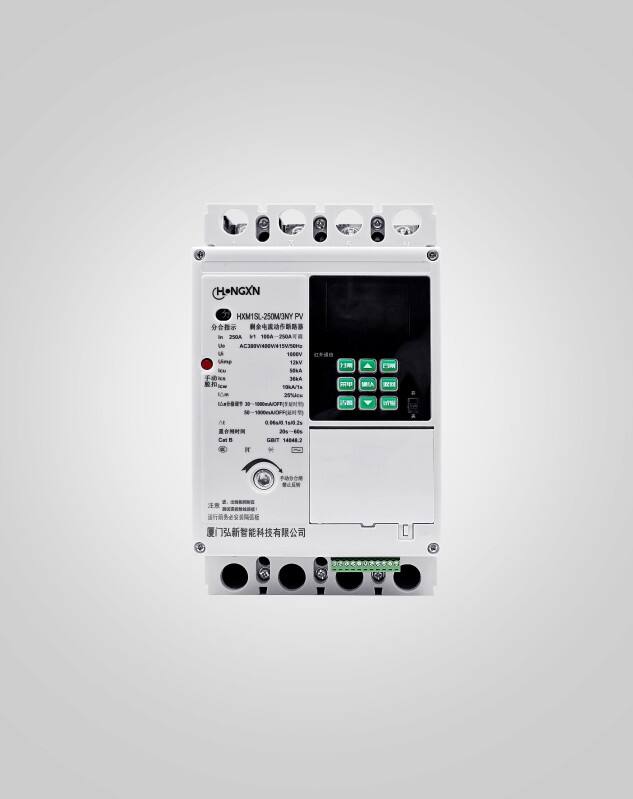
Intelligent Fault Classification: Minimizing False Alarms and Maximizing Fault Detection
Sustaining a delicately fine balance between discrimination, precision, and reliability: Edge ML Trade-offs in Field Deployments
Machine learning implementations deployed to the Edge are expected to balance the level of accuracy achieved with the real-time requirements, as the higher the accuracy is with fault discrimination, the more complex the model becomes, leading to higher latencies and power demands. Optimized implementations are based on quantized neural networks for a wide range of fault signatures, including arc flashes, motor inrush, and internal insulation failure, while still being able to achieve sub 100ms inference times with less than 5% in significantly electrically noisy environments. Energy harvesting requirements have driven the need for extensive sparsity techniques that allow for more than 95% classification fidelity while not compromising the self-powering design integrity.
Validation: Arc Fault Classification in Live Grids with 99.2% Accuracy
Trials at 12 substations over 47,000 unique field events confirmed a 99.2% accuracy in classifying arc faults. By processing harmonic distortion, current transients, and thermal signatures, the system identified hazard arc events with an 83% reduction in false alarms related to benign events (such as motor starts, etc.) when compared to threshold-based techniques. Automatic isolation occurred in less than 1/8 of an AC cycle, confirming that AI can mitigate the risk of electrical fires while maintaining uninterrupted operations.
The function of IoT circuit breakers is based on edge-processing architecture; therefore, they can perform real-time multi-parameter analysis, resulting in transient fault recognition that conventional breakers (electromechanical) would not detect.
Ground faults account for 68% of electrical fires, and the reason for this prevalence is that conventional breakers are unable to detect the gradual breakdown of insulation (progressive leakage) that IoT circuit breakers can monitor and detect as a fault.
Because of the fast cloud loop latency (in the case of IoT circuit breakers, there is no cloud; instead, the time sensor, breaker, and controller are integrated), the closed loop for preventative maintenance is shifted from reactive maintenance to proactive hazard avoidance.
AI plays a crucial role in IoT circuit breakers by identifying, with precision, different fault types and determining the appropriate response times to reduce the risk of electrical fires; hence, the function of AI directly correlates with the fire risk reduction to the circuit.