 EN
EN

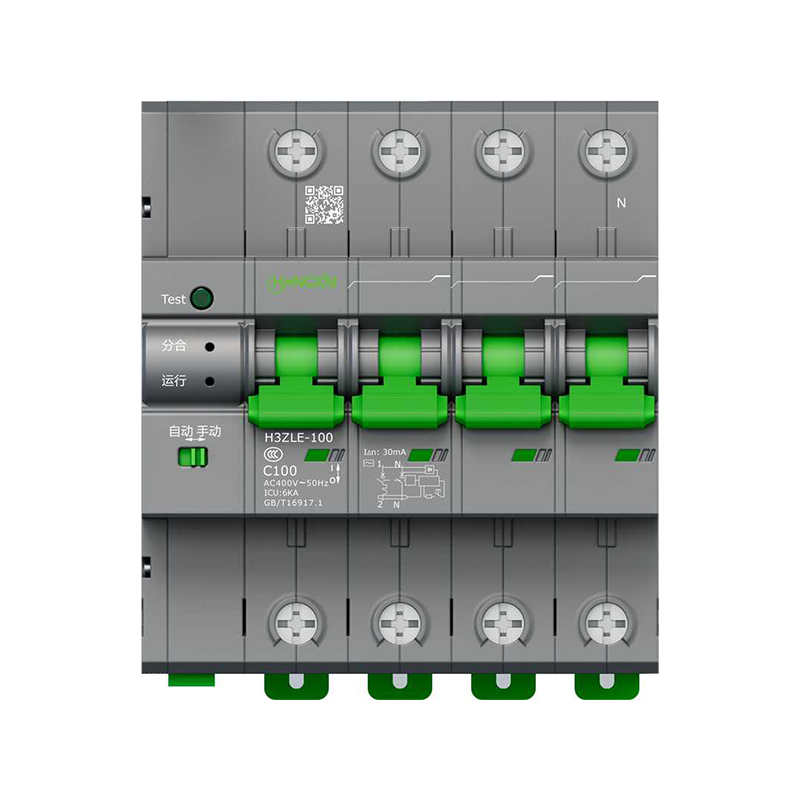
From Oil Tanks to Vacuum Chambers: The Technology Shift in Power Distribution
Walk through any newly commissioned medium-voltage substation, and the switchgear lineup will almost certainly feature vacuum circuit breaker technology. This near-universal adoption across utilities, industrial plants, data centers, and commercial buildings did not happen by accident. The vacuum interrupter solved a set of problems that had plagued earlier technologies — oil, air-magnetic, and SF6 gas breakers — while adding advantages that align well with modern priorities around environmental compliance, operational safety, and maintenance reduction.
The shift began accelerating in the 1980s when vacuum interrupter manufacturing matured and the cost premium over oil breakers narrowed. Today, a vacuum circuit breaker costs roughly equivalent to an SF6 unit of the same rating, offers a lifespan exceeding 20 years without major intervention, and carries none of the environmental or safety baggage of earlier technologies.
Environmental and Safety Advantages Driving Adoption
Zero Greenhouse Gas Emissions Versus SF6
Sulfur hexafluoride (SF6) is the most potent greenhouse gas known, with a global warming potential 23,500 times that of CO₂ and an atmospheric lifetime of 3,200 years. While SF6 breakers are designed to be sealed, slow leakage is inevitable — industry estimates suggest annual leakage rates of 0.1% to 1% of installed capacity. Under the European Union's F-Gas Regulation and similar frameworks in Japan and Australia, SF6 usage in new medium-voltage switchgear faces increasing restrictions.
The vacuum circuit breaker eliminates this problem entirely. The interrupter contains nothing but metal contacts sealed in a high-vacuum ceramic or glass envelope. No gas to leak. No gas to monitor. No gas to reclaim at end of life. For organizations with corporate sustainability targets or those operating in jurisdictions with strict greenhouse gas reporting requirements, choosing vacuum over SF6 simplifies regulatory compliance and reduces long-term environmental liability.
Operational Safety: No Oil, No Explosion Risk
Oil circuit breakers presented a catastrophic failure mode: short-circuit arcing could decompose the oil into explosive gases, and a failure to vent those gases properly could rupture the tank. Even routine maintenance required draining and handling large volumes of insulating oil — a fire hazard and environmental contaminant. The vacuum circuit breaker contains no flammable materials in its interrupting medium, reducing substation fire loading significantly.
Arc flash hazard also differs. In a vacuum interrupter, the arc is fully contained within the sealed envelope. External arc flash can still occur at busbar connections or cable terminations, but the interrupter itself presents zero external arc risk during normal interruption. This matters in metal-clad switchgear where internal arc classification (IAC) per IEC 62271-200 defines the level of personnel protection.
A Power Utility Retrofit in East Africa
Kenya Power, as part of its Last Mile Connectivity Project, needed to upgrade aging 11 kV substations serving newly electrified rural communities. The existing network used oil circuit breakers dating from the 1970s and 1980s, many of which had exceeded their design life and presented reliability problems during the rainy season when moisture ingress degraded oil dielectric strength.
The utility specified vacuum circuit breaker ring main units for the upgrade program. Several of these units, supplied through Hongxin Intelligent Technology's international distribution network, were installed at 11 kV rural distribution points serving between 2,000 and 5,000 customers each. The key metric: after 24 months of operation across 40 substations, forced outage frequency dropped 62% compared to the oil breaker baseline. The biggest contributor was the elimination of moisture-related failures — a vacuum interrupter's performance is unaffected by humidity, unlike oil whose dielectric strength drops sharply when water content exceeds 35 ppm.
Maintenance Economics Over the Asset Lifecycle
The total cost of ownership calculation for medium-voltage switchgear reveals why vacuum technology dominates. An oil circuit breaker requires oil sampling and dielectric testing every 2 to 3 years, contact inspection every 5 years, and oil replacement every 10 years — each event requiring an outage. An SF6 breaker requires gas pressure monitoring and periodic gas quality testing. A vacuum circuit breaker needs mechanical linkage lubrication and contact wear inspection — both achievable during routine substation visits without taking the circuit out of service.
Over a 30-year service life, the cumulative maintenance hours for a vacuum breaker installation typically total 40% to 60% less than an equivalent oil breaker and 20% to 30% less than SF6. When maintenance labor costs, outage penalties, and environmental disposal fees are factored in, the lifecycle cost advantage becomes decisive.
Frequently Asked Questions
Why is vacuum preferred over SF6 for indoor switchgear?
Vacuum interrupters produce no arc byproducts, require no gas handling equipment, and eliminate the need for gas leakage monitoring systems. For indoor installations, the absence of toxic arc decomposition products — SF6 arcs produce acidic byproducts including hydrogen fluoride — simplifies substation ventilation requirements and improves firefighter safety in the event of a building fire. Hongxin Intelligent Technology switchgear installations follow these indoor safety design principles.
Can vacuum circuit breakers switch at higher frequencies than SF6?
Yes. Vacuum interrupters have inherently lower arc energy at interruption because the arc burns for fewer half-cycles. This translates to less contact heating during repetitive switching and longer contact life in applications like arc furnace transformers where switching may occur hundreds of times daily.
What voltage range do vacuum circuit breakers cover?
Commercially available vacuum interrupters cover 3.6 kV to 40.5 kV as standard. Higher voltage applications up to 84 kV exist using two interrupters in series per phase, and 145 kV single-break vacuum breakers are emerging in specialized applications, though SF6 still dominates at transmission voltages above 72.5 kV.
How are vacuum circuit breakers tested for reliability?
Type testing per IEC 62271-100 includes mechanical endurance (10,000 operations for Class M2), temperature rise at rated current, short-circuit making and breaking tests at full rating, capacitive current switching tests, and dielectric withstand tests. Routine production tests include power-frequency withstand on each interrupter, contact resistance measurement, and mechanical timing verification.
Do vacuum circuit breakers create switching overvoltages?
They can, particularly when switching small inductive currents like unloaded transformer magnetizing current. The current chopping phenomenon — where the arc extinguishes abruptly before natural current zero — can generate overvoltages. Modern CuCr contact materials with low chopping current (under 3 A typical) and the use of surge arresters at the transformer terminals effectively manage this.
What is the end-of-life disposal process for a vacuum circuit breaker?
The vacuum interrupter is classified as non-hazardous waste — the ceramic envelope and copper-chromium contacts contain no toxic materials requiring special handling. The operating mechanism and frame are standard recyclable metals. This contrasts with SF6 breakers requiring certified gas reclamation and oil breakers requiring hazardous liquid disposal, making vacuum the simplest end-of-life scenario.