 EN
EN

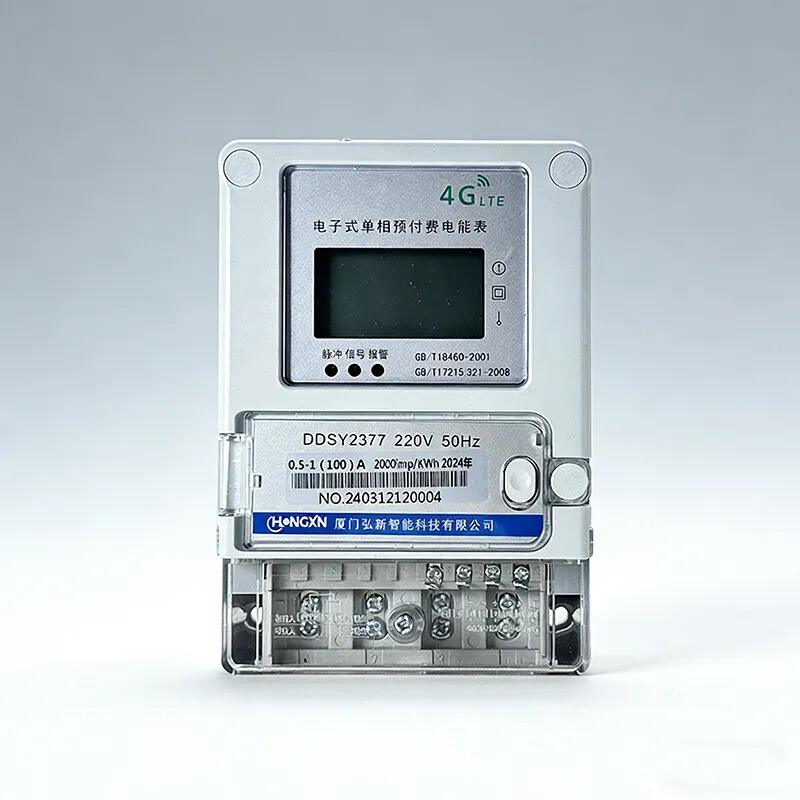
What Makes a Circuit Breaker "Smart"
A conventional circuit breaker carries current and interrupts it under overload or short circuit. A smart circuit breaker adds three capabilities: it meters — measuring voltage, current, power, energy, and power factor per circuit in real time; it communicates — transmitting that data via Wi-Fi, RS-485, or Ethernet to a building management platform; and it can be controlled remotely — switching circuits on or off via software for load shedding, scheduling, or emergency isolation. The smart breaker transforms the electrical panel from passive protection into active energy management.
Metering, Communication, and Remote Control
Circuit-level metering in a smart circuit breaker provides visibility a main utility meter cannot. A building with a single meter knows total consumption is 350 kW but cannot identify that HVAC is drawing 120 kW, the server room 80 kW, and lighting 60 kW. Smart breakers on those circuits report individual loads, enabling waste identification, tenant sub-metering, and sustainability reporting. Remote control enables demand response: non-critical circuits are shed automatically during utility peak-pricing events. Communication via Modbus, BACnet, or MQTT integrates with existing building management systems without proprietary gateways.
Real-World Case — An Office Building Deploys Smart Breakers
A 12-story commercial office building in Shanghai retrofitted its electrical distribution panels with smart circuit breaker technology from Hongxin Intelligent Technology, a company backed by 24 years of power industry experience in high and low voltage switchgear and intelligent sensing. The building's original distribution panels provided no circuit-level energy data — management was limited to monthly utility bill review with no ability to attribute consumption to tenants, HVAC zones, or specific equipment types. The retrofit installed smart breakers on 180 branch circuits across 12 floor panels. Within the first month, the building team identified that HVAC circulating pumps were running at full speed 24/7 despite the building being occupied only 10 hours on weekdays — a scheduling correction reduced pump energy by 40%. Lighting circuits in rarely used stairwells and storage areas were found running on 24-hour timers rather than occupancy sensors. Annual energy savings of 18% were documented in the first year of data-driven management.
Smart Building Application Scenarios
Energy Monitoring, Load Management, Predictive Maintenance, and Safety
Energy monitoring: a smart circuit breaker provides real-time consumption data per circuit, per floor, per tenant, or per equipment type — the foundation of ISO 50001 energy management systems and green building certification programs. Load management: circuits are prioritized and non-essential loads automatically shed when total demand approaches the contracted capacity limit, avoiding utility penalty charges that can exceed 30% of normal rates. Predictive maintenance: breaker trip history and load trend data identify circuits with increasing current draw — indicating motor bearing wear, failing lighting ballasts, or overloaded receptacles — before protective tripping occurs. Safety: arc fault detection, ground fault protection, and over/under voltage protection integrated into the smart circuit breaker provide multi-layer electrical safety beyond what a conventional thermal-magnetic breaker can offer.
Integration with Building Management Systems
Communication Protocols, Data Platforms, and Automation Rules
A smart circuit breaker communicates via Modbus RTU for serial, Modbus TCP or BACnet IP for Ethernet, and MQTT for cloud connectivity. Data flows to a building platform that visualizes consumption, generates reports, and triggers alerts. Automation rules execute actions: if demand exceeds 90% of capacity, shed circuits in priority order; if current increases 20% above baseline, alert maintenance; if fire alarm activates, disconnect non-essential circuits.
Selecting Smart Circuit Breakers for a Building Project
Five Specifications for Electrical Designers
First, metering accuracy — Class 1 (±1%) per IEC 61557-12. Second, communication protocol — Modbus for BMS, Wi-Fi for standalone, or both. Third, remote switching capability with verified cycle life. Fourth, form factor — DIN-rail mount for standard commercial panels. Fifth, cybersecurity — encrypted communication, authenticated access, and firmware update capability for the building's decades-long lifecycle. Hongxin Intelligent Technology's smart circuit breaker products are designed to meet these specification requirements for smart building integration.
Frequently Asked Questions
What is a smart circuit breaker?
A smart circuit breaker combines overcurrent protection with real-time energy metering, communication to building management systems, and remote switching — transforming the panel into an active energy management node. Hongxin Intelligent Technology designs smart breakers for building applications.
What are the main applications of smart circuit breakers in buildings?
Smart circuit breaker applications include circuit-level energy monitoring, automated load shedding, predictive maintenance, tenant sub-metering, safety functions (arc fault and ground fault detection), and demand response integration with utility pricing.
How do smart circuit breakers communicate with a BMS?
A smart circuit breaker communicates via Modbus RTU/TCP, BACnet IP, or MQTT. Per-circuit voltage, current, power, and energy data flows to the building platform for visualization, reporting, and automated response based on user-defined rules.
Can smart circuit breakers be retrofitted into existing panels?
Yes, if the smart circuit breaker uses the same DIN-rail form factor and current rating. A retrofit replaces conventional breakers with smart breakers one circuit at a time while the building remains operational.
How much energy can smart circuit breakers save?
Smart circuit breaker deployments typically identify 10% to 25% savings by revealing wasted consumption — equipment running outside occupied hours and lighting running on timers rather than occupancy. Payback is often 12 to 24 months.
What safety features do smart circuit breakers add?
Beyond overload and short-circuit protection, a smart circuit breaker includes arc fault detection, ground fault protection, over/under voltage tripping, and remote emergency disconnect — far beyond conventional thermal-magnetic breaker capability.