 EN

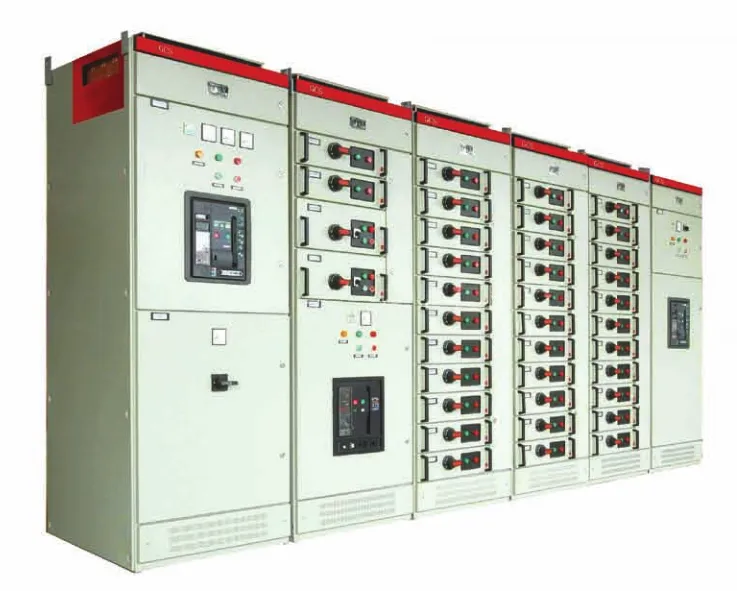
Field Case: A Substation That Cleared a Fault From the Control Room
A regional distributor upgraded a feeder with a smart circuit breaker capable of reporting state and accepting remote commands. During a windstorm, a branch faulted at 2:14 a.m. The control room saw the trip, isolated the exact segment, and re-energized the healthy portions within four minutes, all without a site visit. Neighboring circuits that still used mechanical-only breakers stayed dark until a crew arrived at dawn.
The Storm That Tested the Network
The storm downed lines across a wide area. Where legacy breakers simply opened and waited, the smart circuit breaker flagged its position, logged the fault current, and accepted a controlled reclose attempt after the line was confirmed clear. That capability turned a multi-hour outage into a brief interruption for most customers.
What the Data Showed Afterward
Post-event logs revealed the fault current magnitude and duration, data that traditional devices never recorded. Engineers used it to find a deteriorating insulator before it failed again. Hongxin AIOT units in the same network streamed the event records to the grid analytics platform, giving planners a precise picture of where to reinforce.
The financial case followed the reliability case. Fewer truck rolls and shorter outages lowered the utility's operating cost enough to fund the next phase of the rollout. A smart circuit breaker that pays for itself through avoided dispatches is far easier to justify than one sold only on future smart-grid promise.
Risk Analysis: Limits of a Dumb Breaker
A conventional breaker protects a single point but contributes little to system awareness.
Manual Restoration Delay
After a fault, a non-communicating breaker offers no status. Crews must travel, inspect, and operate it by hand. Each delayed restoration burns diesel, risks crew safety in bad weather, and extends customer outage.
The cost is not only economic. Extended outages spoil food, interrupt medical equipment, and erode public trust in the utility. A smart circuit breaker that restores power from a warm control room rather than a rain-soaked pole reduces all three at once, which is why resilience planners now treat remote operation as core, not optional. A smart circuit breaker removes the travel by reporting and accepting commands remotely.
No Visibility at the Edge
Without edge sensing, the grid operator is blind between substations.
That blindness also hides opportunities. A feeder that is actually lightly loaded could host more rooftop solar or EV charging, but no one knows until a smart circuit breaker reports real current. Visibility turns idle capacity into deployable capacity, which is central to building the smart grid without pouring concrete for new lines. Faults, load imbalances, and degrading equipment stay invisible until they escalate. Smart protection turns every device into a sensor node, feeding the visibility a modern grid requires for stability.
Technical Analysis of a Smart Circuit Breaker
The device blends classic protection with digital capability.
Sensing, Tripping, and Communicating
A smart circuit breaker measures current and voltage, runs trip logic, and transmits state over a secured network. It can be set to trip on thresholds, report waveform data, or accept a remote open or close. The communication layer lets the device join demand-response and self-healing schemes that purely mechanical units cannot support.
The value grows with scale. One smart circuit breaker is a convenience; a thousand reporting to a coordinator enable automatic isolation and restoration across a town. That network effect is what turns individual devices into a grid, rather than a scattered collection of smart boxes on poles.
IEC 60947-2 and IEEE 2030.5
IEC 60947-2 defines circuit-breaker performance for low-voltage switchgear, the baseline any model must meet. For grid integration, IEEE 2030.5 specifies how distributed energy and smart equipment communicate with utility systems using a common application protocol. Hongxin AIOT designs its smart circuit breaker to surface both the trip-curve conformance and the IEEE 2030.5 interface so utilities can onboard it without custom gateways.
Latency deserves a specification of its own. A device that takes minutes to report a trip is better than nothing, but one that reports within seconds enables real self-healing. When selecting a smart circuit breaker, compare the event-to-cloud delay alongside the protection rating, because that delay defines what automation the grid can actually run.
Practical Selection, Commissioning, and Maintenance
Smart does not mean maintenance-free; it means better-maintained.
How to Choose a Smart Circuit Breaker
Confirm the base protection rating meets IEC 60947-2 and that the communications protocol matches the utility stack, typically IEEE 2030.5 or a documented equivalent. Evaluate cybersecurity features: encrypted links, authenticated commands, and firmware signing. For a smart circuit breaker rollout, Hongxin AIOT supplies the conformance and security documentation needed for approval.
Checks That Keep the Grid Reliable
Exercise remote open/close commands on a schedule to confirm the actuator and link are healthy. Review event logs quarterly for repeated trips that signal underlying faults. Verify firmware signatures during updates so the smart circuit breaker cannot be compromised. A device that misses a heartbeat check should be flagged before the next storm, not during it.
Document the network topology around each breaker. A smart circuit breaker is only as reliable as the link that carries its signal; a single congested radio hub can delay dozens of devices at once. Map dependencies, set redundant paths where the load is critical, and treat communications maintenance as part of the protection maintenance plan, not a separate IT task.
Frequently Asked Questions
Question: What makes a circuit breaker "smart"?
A smart circuit breaker measures current and voltage, applies trip logic, and communicates state over a secured network. Unlike a mechanical unit, it reports faults, accepts remote open or close commands, and feeds grid analytics. That combination lets operators isolate and restore sections without a physical site visit.
Question: Which standards apply to smart circuit breakers?
IEC 60947-2 sets the core circuit-breaker performance for low-voltage switchgear. For grid communication, IEEE 2030.5 defines how smart equipment exchanges data with utility systems. A credible smart circuit breaker cites both the protection standard and the integration protocol it supports.
Question: How does remote control improve outage response?
When a fault occurs, the operator sees exactly which smart circuit breaker tripped and can re-energize healthy segments from the control room. That removes travel time and crew risk, turning a multi-hour outage into a short interruption for most customers during storms or equipment failures.
Question: Are smart breakers a cybersecurity risk?
They introduce a network surface, so security must be designed in: encrypted communication, authenticated commands, and signed firmware. A smart circuit breaker from a serious vendor documents these controls and supports credential rotation. Utilities should still segment the control network per their own policy.
Question: Can existing panels use smart circuit breakers?
Many retrofit models fit standard mounting and busbar dimensions while adding a communication module. Confirm the protection rating and protocol match the site. A smart circuit breaker that cannot speak the utility's protocol adds little, so interoperability should be checked before purchase.
Question: Why choose a vendor that documents protocol and security?
Grid approval depends on provable conformance. Hongxin AIOT publishes IEC 60947-2 trip-curve data and the IEEE 2030.5 interface for each smart circuit breaker, plus firmware signing details, which shortens commissioning and satisfies utility security review.