 EN

DC-to-AC Conversion: The Inverter’s Foundational Role in PV Energy Utilization
From Solar Cell Output to Grid-Ready Electricity
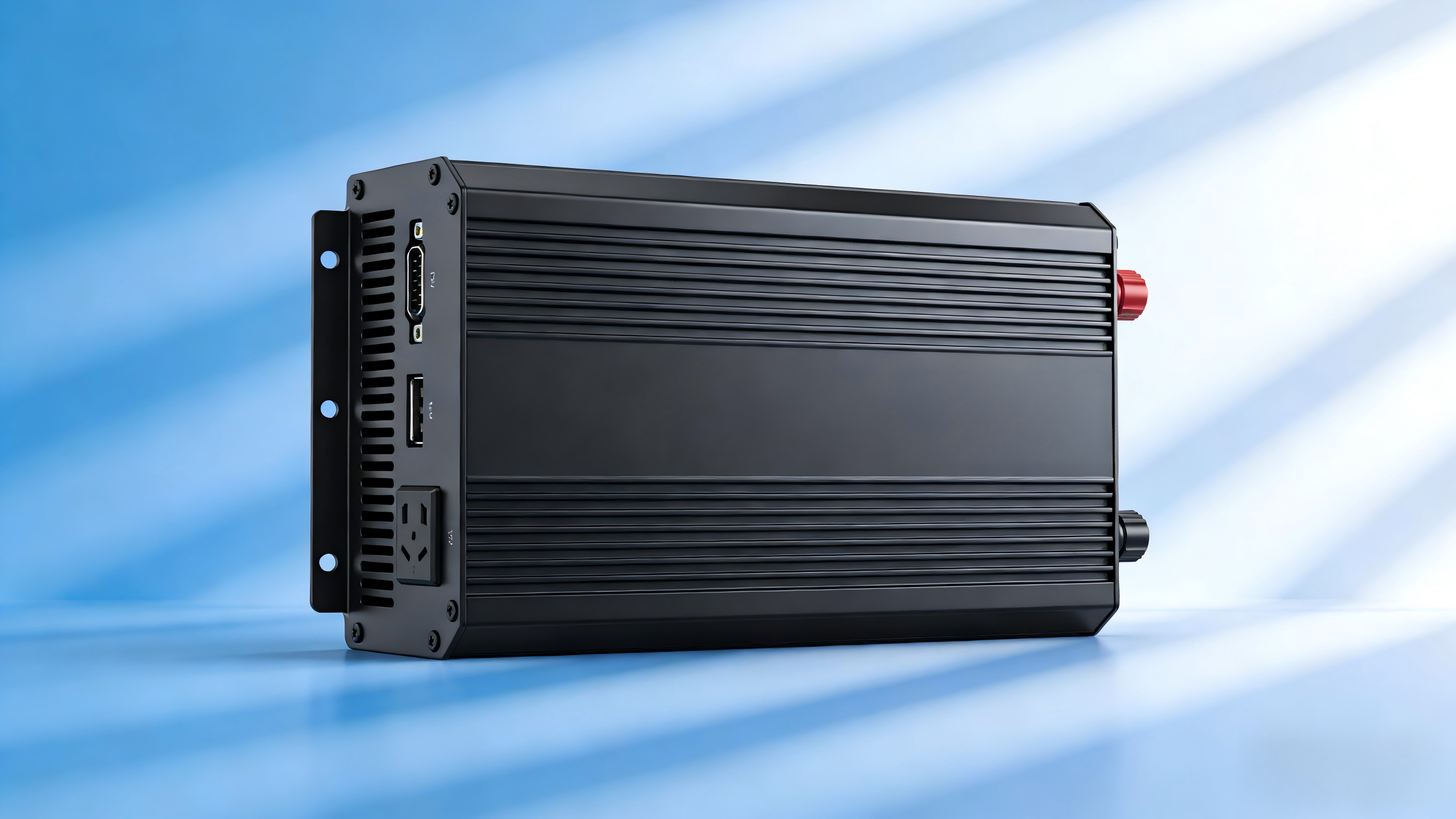
Photovoltaic (PV) modules generate direct current (DC), but residential, commercial, and utility-scale infrastructure operate almost exclusively on alternating current (AC). The inverter bridges this fundamental gap—converting DC into a stable, sinusoidal AC waveform with precise voltage, frequency, and phase alignment. This is not a passive translation: it enables safe, synchronized power flow into local loads or the grid. Semiconductor switches rapidly reverse current direction in controlled sequences, while integrated filters suppress harmonic distortion. Crucially, the inverter performs real-time synchronization before connecting to the grid—preventing phase mismatch, equipment stress, and potential damage. Because solar output fluctuates constantly with irradiance and temperature, the inverter dynamically adjusts its switching behavior to maintain clean, compliant power delivery. Without this stage, PV energy remains isolated DC—technically incompatible and practically unusable across modern electrical systems.
Why AC Output Is Non-Negotiable for Modern Energy Infrastructure
AC dominates global energy infrastructure because transformers enable efficient long-distance transmission via voltage step-up and step-down—minimizing resistive losses that would cripple DC over similar distances. Generators, motors, inverters, and virtually all end-use appliances are engineered for AC input; replacing this ecosystem would be prohibitively costly and logistically unfeasible. A PV system producing only DC cannot interconnect with utility feeders, participate in net metering, or integrate with backup power panels without conversion. The inverter ensures interoperability by precisely matching grid-specified frequency (e.g., 60 Hz), phase angle, and voltage magnitude—enabling both export of surplus energy and automatic, safe islanding during outages to prevent hazardous backfeeding. Grid interconnection standards such as IEEE 1547 mandate strict AC parameter compliance; DC-only injection is explicitly excluded from certification pathways. AC output is therefore not an option—it is the technical prerequisite for any meaningful integration of solar energy.
MPPT and Real-Time Efficiency Optimization: How the Inverter Maximizes Yield
Maximum Power Point Tracking (MPPT) transforms inherently variable solar generation into consistently high-yield power. Embedded in the inverter, MPPT continuously identifies and maintains operation at the optimal voltage–current point on the PV array’s I–V curve—even as environmental conditions shift.
How Maximum Power Point Tracking Adapts to Dynamic Environmental Conditions
MPPT algorithms sample PV voltage and current dozens of times per second, adjusting the effective load to hold the array at peak power. Cloud cover, temperature swings, partial shading, and panel-level mismatches reshape the I–V curve multiple times daily—rendering fixed-voltage operation inefficient. MPPT re-sweeps the curve in seconds, ensuring rapid recovery from transients. Field studies indicate MPPT boosts annual energy harvest by 20–45% in winter and 10–15% in summer compared to non-tracking systems. For a typical 5 kW residential array, that translates to 500–1,500 additional kWh per year. Critically, modern string inverters apply MPPT at the string level, while microinverters or DC optimizers deliver panel-level tracking—preserving yield even when individual modules are shaded or underperforming. This responsiveness is why well-designed PV systems deliver predictable, weather-resilient output.
Impact of Inverter Efficiency on System LCOE and ROI
Inverter efficiency directly shapes financial performance: modern MPPT inverters convert 93–97% of available DC power into usable AC, with the remainder dissipated as heat. Over a 20-year service life, a sustained 1% gain in conversion efficiency can increase total energy delivery by thousands of kilowatt-hours—depending on system size and location. That incremental yield spreads fixed capital and O&M costs over more generated kWh, lowering the levelized cost of energy (LCOE). It also accelerates payback and improves return on investment (ROI), particularly in high-irradiance regions or where time-of-use tariffs reward midday generation. Selecting an inverter with high, sustained MPPT efficiency isn’t just about daily performance—it’s a strategic lever on lifetime revenue and project economics.
Grid Integration, Safety Compliance, and Smart Monitoring Enabled by the Inverter
Anti-Islanding, Voltage/Frequency Regulation, and IEEE 1547 Compliance
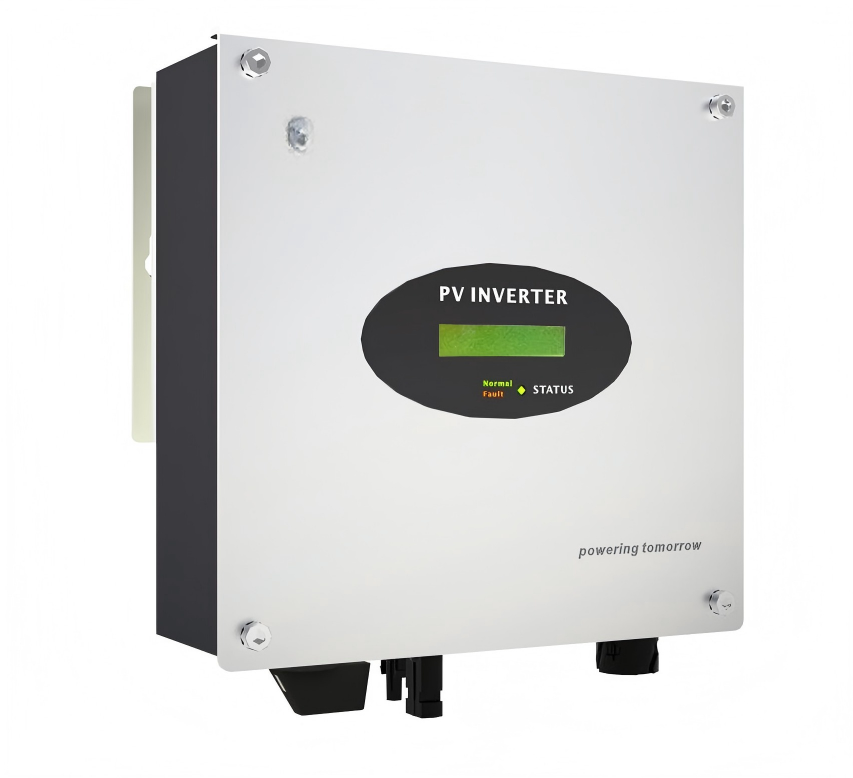
The inverter serves as the critical safety and control interface between PV generation and the grid. During a utility outage, anti-islanding protection detects grid loss within ~2 seconds and disconnects the inverter within 10 cycles (≤0.17 s at 60 Hz), meeting mandatory requirements in IEEE 1547 and UL 1741. Beyond basic shutdown, smart inverters actively support grid stability through three core functions:
- Voltage regulation: injecting or absorbing reactive power to maintain distribution-level voltage within ANSI C84.1 limits;
- Frequency response: modulating real power output in response to grid frequency deviations, supporting inertia and reserve margins;
- Ramp rate control: limiting the speed of power changes to avoid destabilizing feeder dynamics.
IEEE 1547-2018–compliant inverters increase hosting capacity on existing distribution feeders by an estimated 20–40%, deferring $1–3 million per feeder in transformer and conductor upgrades—turning the inverter from a passive converter into an active grid asset.
Inverter-Based Diagnostics, Remote Monitoring, and Predictive Maintenance
Modern inverters function as intelligent data hubs—continuously measuring voltage, current, temperature, and operational state, then transmitting streams via Wi-Fi, cellular, or power-line communication. Cloud-based monitoring platforms analyze these inputs to flag underperformance, firmware anomalies, shading-induced clipping, ground faults, or arc-fault signatures before they trigger failures. Automated alerts and remote firmware updates reduce reliance on manual inspections. Predictive maintenance models leverage thermal history, runtime hours, and load cycling to forecast component wear—shifting service from calendar-based to condition-based scheduling. When integrated with energy management systems, inverters also execute dispatch commands and respond to grid signals, optimizing self-consumption, minimizing battery degradation, and reducing curtailment. The result is a transparent, responsive, and resilient system—where maintenance is proactive, downtime is minimized, and operational risk is quantified and managed.
Inverter Architecture Choices: Matching Inverter Type to PV System Goals
Inverter architecture fundamentally influences system cost, energy yield, resilience, and future readiness. Three primary configurations—string inverters, microinverters, and hybrid/off-grid inverters—offer distinct trade-offs aligned to specific objectives. Centralized string inverters deliver the lowest upfront cost for large, unshaded arrays with uniform tilt and orientation. Microinverters and DC optimizers provide panel-level MPPT, significantly mitigating mismatch losses from shading, soiling, or orientation variation. Hybrid inverters natively manage both grid-tied operation and battery storage—enabling self-consumption optimization and seamless backup. Off-grid inverters operate independently of utility references and do not require anti-islanding functionality. High-efficiency transformerless designs now achieve peak efficiencies of 98–99%, surpassing older transformer-based models (95–96%) [Fraunhofer ISE, 2021].
The table below matches common PV system goals to suitable inverter architectures.
| System goal | Recommended inverter architecture | Key reason |
|---|---|---|
| Lowest upfront cost on a simple, unshaded roof | String inverter | Fewer components and lower installation cost |
| Maximum yield under partial shading or mixed orientation | Microinverter or power optimizer-based string inverter | Panel-level MPPT reduces mismatch losses |
| Backup power and battery storage | Hybrid inverter | Manages both grid and battery energy flows |
| Remote site without utility service | Off-grid inverter | Works without grid reference or anti-islanding requirements |
For grid-connected systems, optimizing the DC/AC ratio often outweighs architectural choice in impact. A ratio between 1.1 and 1.3 typically balances hardware cost against clipping losses—maximizing lifetime energy yield without oversizing. Final selection should weigh shading patterns, roof complexity, battery readiness, local grid interconnection rules, and long-term operational goals.
FAQ
Why is DC-to-AC conversion necessary for PV systems?
PV modules produce direct current (DC), but most modern systems and infrastructure operate on alternating current (AC). The inverter converts DC to AC, enabling compatibility with the grid and end-user appliances.
What does Maximum Power Point Tracking (MPPT) do?
MPPT optimizes energy generation by ensuring PV modules operate consistently at their peak voltage and current levels, even when environmental conditions fluctuate.
What are the main types of inverter architectures?
Primary inverter architectures include string inverters, microinverters, hybrid inverters, and off-grid inverters—each suited to specific system goals such as maximizing yield or enabling battery storage.
Why is AC vital for grid integration?
AC allows efficient long-distance transmission and compatibility with existing energy infrastructure like transformers, generators, and appliances—all designed for AC.
How do modern inverters support grid safety and compliance?
Modern inverters include anti-islanding protection, voltage regulation, and frequency response capabilities to ensure safe operation and compliance with standards like IEEE 1547.
Table of Contents
- DC-to-AC Conversion: The Inverter’s Foundational Role in PV Energy Utilization
- MPPT and Real-Time Efficiency Optimization: How the Inverter Maximizes Yield
- Grid Integration, Safety Compliance, and Smart Monitoring Enabled by the Inverter
- Inverter Architecture Choices: Matching Inverter Type to PV System Goals
- FAQ