 EN

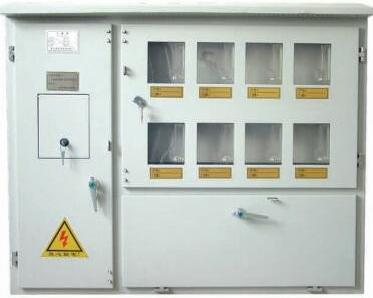
Why Legacy Low Voltage Distribution Systems Can’t Support Modern Smart Homes
Load Evolution: EVs, Heat Pumps, Solar + Storage, and Always-On Smart Devices
Modern homes no longer present steady, predictable loads. A typical Level 2 EV charger requires a dedicated 40 A or 50 A circuit; heat pumps with auxiliary heating can draw 60 A or more during winter peaks. Solar-plus-storage systems shift from consuming to exporting power multiple times per day—introducing bidirectional current flow that legacy panels weren’t designed to handle. These systems push current back into the panel, stressing undersized neutrals and bus bars.
Legacy low voltage distribution panels were engineered around 15–20 A lighting and receptacle branches—not sustained high-amperage or reverse-power conditions. Meanwhile, always-on smart devices—sensors, hubs, touch panels, and edge nodes—draw continuous small loads across many circuits. This increases standby demand and introduces harmonic distortion, further degrading power quality.
The result is frequent breaker trips, voltage drop on long runs, and minimal headroom for expansion. Electricians routinely find existing bus ratings, neutral conductors, and branch-circuit counts insufficient without panel replacement or subpanel additions. In retrofit scenarios, this often triggers a full service upgrade, new subpanel installation, or complex phase rebalancing—driving up both material and labor costs.
Architectural Mismatches: Fixed Wiring, Centralized Control, and Lack of Scalability
Even when capacity appears adequate, legacy distribution architecture creates systemic bottlenecks. Panels are frequently full—with no spare knockouts or physically separated compartments for data-grade cabling. Fixed home-run wiring from a central panel makes adding or reconfiguring zones prohibitively expensive, as new cable must be pulled through finished walls.
Centralized control assumes all signals return to one location, extending cable lengths and worsening voltage drop. There’s little modularity: adding a lighting zone or sensor network typically demands separate power supplies, relay modules, or controllers—creating a patchwork of proprietary components. This raises labor cost, introduces single points of failure, and undermines interoperability.
Modern smart homes require distributed bus structures, addressable nodes, and scalable power budgets. Older panels rarely offer spare DIN rail space, isolated outputs, or physical separation between power and control conductors—so upgrading one subsystem often forces changes across the entire electrical infrastructure.
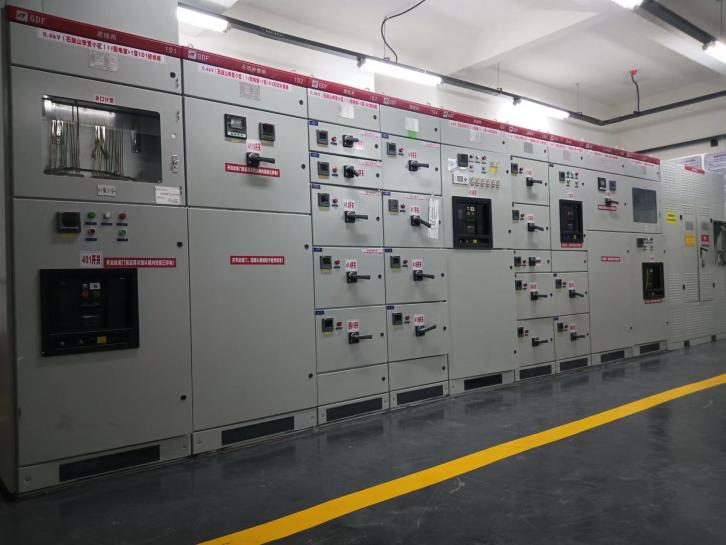
Core Upgrades Required for Future-Ready Low Voltage Distribution
Modular Bus Architectures (e.g., KNX, DIN-Rail Mini Server + Bus, DALI-2)
Legacy low voltage distribution relies on dedicated cables from a central panel to each load—a rigid topology that limits flexibility and scalability. Future-ready systems adopt shared bus topologies: a single twisted-pair or IP backbone connects lighting, shading, HVAC dampers, and occupancy sensors without requiring a home-run for every device.
Open standards like KNX and DALI-2 provide interoperable device profiles and standardized commissioning tools. A compact DIN-rail mini server paired with modular bus couplers enables room-level scalability without rewiring or panel replacement. During design, plan for spare bus branches and isolation zones—and specify certified bus power supplies to maintain stable voltage over extended runs.
This approach cuts cable volume by up to 60%, simplifies fault tracing, supports phased smart home upgrades, and reduces long-term labor costs.
Power-over-Data Infrastructure: PoE Lighting, Sensing, and Edge Compute Integration
Power over Ethernet (PoE) converges low-voltage power delivery and data onto a single cable—reducing conduit fill, eliminating separate low-voltage transformers, and accelerating installation. PoE lighting, occupancy sensors, and edge compute controllers connect directly to a managed switch instead of line-voltage circuits.
IEEE 802.3bt delivers up to 90 W per port—sufficient for most LED fixtures, smart blinds, and compact automation gateways. Design with midspan injectors or PoE-enabled switches supporting Layer 2 management, and place critical switches on uninterruptible backup power. Because moves, additions, and changes happen via re-patching at the switch—not rewiring branch circuits—this infrastructure enables rapid adaptation to evolving smart home needs.
It also unlocks per-port energy monitoring, remote resets, and scheduled load shedding—capabilities absent in traditional low-voltage distribution.
Smart Home Integration Best Practices for Electrical Contractors
Design-Phase Coordination: Aligning Low Voltage Distribution with AC Panel Layout and Network Infrastructure
Effective integration begins before drywall. Contractors must align low voltage distribution planning with AC panel layout, load mapping, and network infrastructure before wall closures. Start by cross-referencing always-on loads (EV chargers, heat pumps, solar inverters, PoE lighting zones) against available breaker spaces, cable pathways, and conduit capacity.
Install spare conduits and at least Cat6A (or fiber) cabling in key rooms—including media closets, garages, and primary living areas—to avoid costly retrofits later. Maintain strict separation between low voltage and AC conductors to prevent electromagnetic interference and preserve signal integrity. Verify that central rack positions, patch panels, and power supplies have adequate ventilation, physical access, and structural support.
Document all cable paths, rack elevations, and network schemes in a shared, version-controlled record. A coordinated shop drawing helps verify that enclosures don’t obstruct access to AC panels or network terminations—preventing rework, supporting scalability, and giving homeowners functional headroom for future devices.
Commissioning & Validation: Signal Integrity Testing and Interoperability Verification
Commissioning must validate real-world performance—not just theoretical compliance. Use cable certifiers to confirm Cat6A or fiber links meet bandwidth and PoE delivery specifications. Test each powered device under maximum load and verify voltage remains within manufacturer tolerances (e.g., ±5% for PoE Class 5+ devices). Check signal integrity on bus segments and wireless gateways—especially where cables run parallel to AC lines.
Then perform end-to-end interoperability testing across lighting, climate, security, and audio-visual subsystems. Confirm commands route correctly, scene triggers execute reliably, and failover behavior meets expectations (e.g., local control during network outages). Record pass/fail results, firmware versions, configuration files, and photos of terminations and rack layouts.
This documentation establishes a repeatable baseline for service visits, warranty claims, and homeowner handover—ensuring confidence in system reliability and long-term maintainability.
FAQ
Why can’t legacy low voltage systems support modern smart homes?
Legacy systems were designed for lower and steady power loads. Modern homes with devices like EV chargers, heat pumps, solar-plus-storage systems, and always-on smart devices require higher capacity, better scalability, and consistent power quality, which older systems often lack.
What are modular bus architectures, and why are they important for smart homes?
Modular bus architectures like KNX or DALI-2 use shared bus topologies to connect multiple devices with minimal rewiring. These systems improve flexibility, scalability, and reduce long-term labor costs, making them ideal for evolving smart home needs.
What is Power-over-Ethernet (PoE) and how does it support smart home integration?
Power over Ethernet (PoE) combines power delivery and data transmission over a single cable. It simplifies installation, reduces costs, and provides features like per-port energy monitoring and remote resets, which are critical for smart home systems.
How can electrical contractors better coordinate smart home integration?
Contractors should align low voltage distribution planning with AC panel layout and network infrastructure early in the design phase. This includes cross-referencing load requirements, maintaining clear documentation, and ensuring proper cable management to avoid costly retrofits later.
Why is commissioning and validation important in smart home setups?
Commissioning ensures real-world performance by testing cable integrity, voltage compliance, and interoperability of subsystems. It also creates a reliable baseline for troubleshooting and long-term maintenance.
Table of Contents
- Why Legacy Low Voltage Distribution Systems Can’t Support Modern Smart Homes
- Core Upgrades Required for Future-Ready Low Voltage Distribution
- Smart Home Integration Best Practices for Electrical Contractors
-
FAQ
- Why can’t legacy low voltage systems support modern smart homes?
- What are modular bus architectures, and why are they important for smart homes?
- What is Power-over-Ethernet (PoE) and how does it support smart home integration?
- How can electrical contractors better coordinate smart home integration?
- Why is commissioning and validation important in smart home setups?