 EN
EN

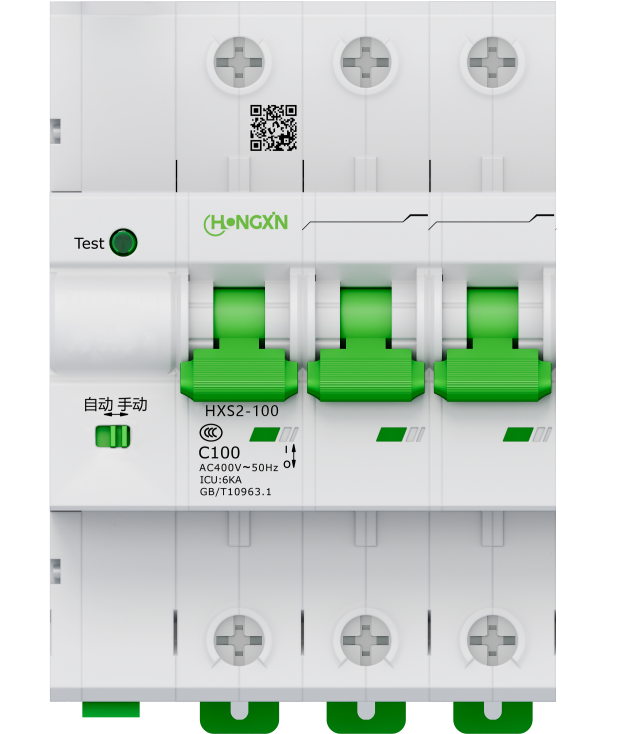
Existing Circumventing The Trip-and-Reset Falcon of IoT Circuit Breakers
Advanced features of IoT Circuit Breakers that enable predictive safety
The cycle speed of conventional circuit breakers span from 20 to 50 milliseconds as they react to damage that has already been done. IoT circuit breakers respond to damage that has the potential to occur but has not reached the point of thermal runaway that would cause a significant safety hazard, due to micro-arcing; circuit breakers from 20 to 50 milliseconds respond to damage at a speed of 30 times the rate (30×) that 20 to 50 milliseconds circuit breakers respond to micro-arcing. Based on the verification of the NFPA (National Fire Protection Association) as of 2023, it has been established that IoT circuit breakers can prevent 83% of electrical fire eruptions. They respond to incendiary faults as they form.
The Principles of Arc Faults and Ground Fault Circuits and the Inefficiencies of the Traditional Circuit Breakers
Traditional thermal-magnetic breakers can respond to a damage level of over 15 to a 20-amp current surge. Traditional breakers do not respond to current faults of less than 5 killer amps when they are due to series arcing, to parallel faults whereby the neutral line leaks to the ground, and to glowing connections which occur when loose terminals reach over 300 degrees. IoT breakers can provide high sensitivity and high speed to identify stealth damage which challenges the breakers.
Real-Time Remote Monitoring and Instant Hazard Alerts via IoT Circuit Breaker Connectivity
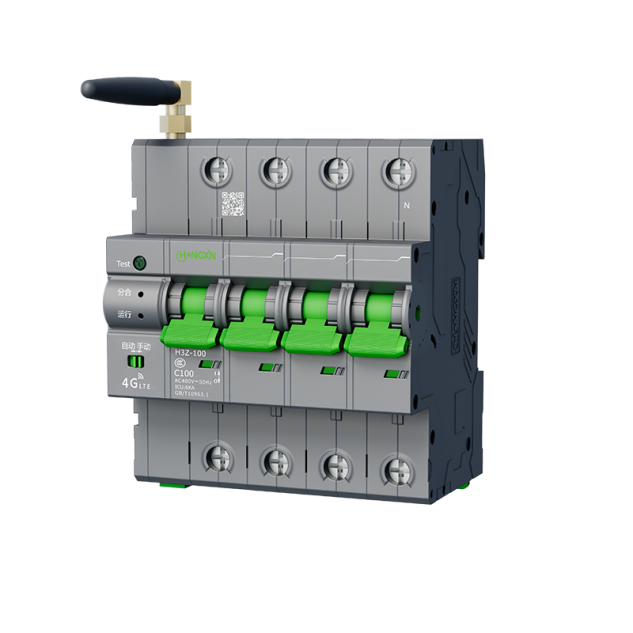
real-time data on voltage, current, temperature, and power quality.
Zigbee and Wi-Fi radios can be found in IoT circuit breakers today, and these smart circuit breakers can send data on voltage, current, temperature, and power quality, along with harmonic distortion and other power quality issues, to break them down and send them for further analysis. The data anomalies include sags and swells, as well as a 5 degree C increase in the temperature of a circuit breaker. These anomalies may signal a growing problem, repair, and ultimately, cause a trip. The facility managers can access the data, referred to as electrical vital signs, 24/7 via the dashboards, and take action in the event the electrical parameters exceed safe limits. This data can be captured via smart circuit breakers. Eliminating an average of 67% of the breakdowns of the equipment, the data moves the maintenance paradigm shift from retroactive to proactive.
The significant decrease in elapsed time is achieved via push notifications and diagnostics delivered via app/SMS.
Upon the detection of an event, a smart breaker quickly sends a rich set of diagnostics, including fault type, fault location, and fault severity, along with thermal or waveform data, to the maintenance team. In one instant, the smart circuit breakers delivered a ground fault event along with real time thermal imaging and a fault location, and the engineers received a text message that included the fault information and a geo location to their devices. Incident rounds are eliminated due to the smart circuit breakers and diagnostics, and incident resolution times are decreased by over 90%. The smart circuit breakers take an additional step to ensure safety by prioritizing alerts by impact level, and the smart circuit breakers send notifications and diagnostics for all events and faults. To meet safety and compliance audit requirements, the faults and events are automatically recorded in a maintenance log on the smart circuit breakers.
Factoring in Safety With an IoT Circuit Breaker to Protect it from AFCI and GFCI Safety Hazards
AFCI and GFCI combined as dual-function breakers incorporates arc-fault and ground-fault protection. Applications of this new device for residential and commercial electrical circuits, combined with IoT technology, offers a new benchmark in electrical safety. Traditional breaker boxes required a dedicated GFCI and dedicated AFCI breaker, thus requiring more space. The AFCI-GFCI hybrid breaker devices integrate the functions of three different devices into one, and at the same time protects against series and parallel faults, and leakage currents. For applications such as kitchens and bathrooms where the usage of circuits is more hazardous due to the environment, moisture is more prevalent, and safety devices are more critical, integrated circuit protection provides multiple functions across the circuit protection spectrum. For the first time, advanced protection and real-time diagnostics are provided at the same cost as the basic, traditional protection devices. Recent advances in IoT technology also alleviate nuisance tripping. IoT takes the protection a step further by providing analytics based on the arc. This protects against hostile arc-faults, while benign faults are acute and benign as drawn.
Predictive Maintenance Powered by IoT Circuit Breaker Analytics
Predictive Maintenance: Circuit Breaker Thermal Drift and Leakage Current Trends
From simple condition monitoring, IoT circuit breakers offer enhanced predictive maintenance by tracking thermal drift – gradual resistance increases in connections – and leakage current, which is a precursor to insulation breakdown. Our machine learning models analyze and correlate these data streams against failure cases and flag significant statistical deviations. Our approach is based on multiple peer-reviewed field studies which demonstrate a reliable prediction of component failure 3–6 weeks in advance, 74% reduction in unplanned downtimes, and a 30% cost reduction in maintenance. The facility teams leverage the provided kéy data to plan specific interventions which may include the replacement of old circuit breakers, terminal retreats, and circuit re-insulation to avoid the faults from leading to arc flashes and fire hazards.
Residential Impact Research: IoT Breakers and Load-Intensive Devices
Example: Over the course of a study done on a 1,200-unit apartment complex, the implementation of real-time thermal surveillance and load-balancing Artificial Intelligence reduced HVAC overloads by 68% in a 6 month period.
The IoT Breakers consistently outperformed the ability of physical circuit breakers to trip the circuit by taking a life saving re-route of the circuit and defending personnel and assets by taking the route of other breakers. The IoT Breakers smelled the surge of current and performed the auto protective action of re-routing power. The need for HVAC protections was so significant that it created a loss of sophisticated operational safety as the appliances presented a clear and present danger. The HVAC systems of the 1,200-unit apartment complex were constantly breaking due to a lack of protective measures and lost an estimated $740,000 in 2023 alone for facility safety. Property managers received real-time alerts in the form of push notifications that assisted in sustaining a protective operational stance.
Are you asking yourself what are IoT circuit breakers?
In the simplest of terms an IoT circuit breaker is an advanced electronic device with enhanced features for monitoring and diagnosing which operates with real-time, current-based artificial intelligence.
Will IoT circuit breakers ultimately prevent electrical fires?
IoT circuit breakers are built to save the loss of the facility by monitoring arc chances and actively defending and neutralizing thermal runaways. The ability to isolate the thermal runaways informs us that up to 83% of electrical fires are preventable with the use of IoT circuit breakers.
What advantages are there of having both an AFCI and GFCI combined in an IoT circuit breaker?
Having AFCI and GFCI combined in a single device allows for both arc-fault and ground-fault protection in a single device. This reduces the footprint in the panel and decreases the complexity in the wiring and reduces the overall cost. This increases the protection in the potentially damp areas like the kitchen and bathrooms.
What role do IoT circuit breakers play in predictive maintenance?
IoT breakers signal key indicators of degradation like thermal drift and leakage current and use machine learning algorithms to model and predict events. This decreases unplanned outages and reduces upkeep costs by enabling the maintenance team to react before faults become detrimental.