 EN
EN

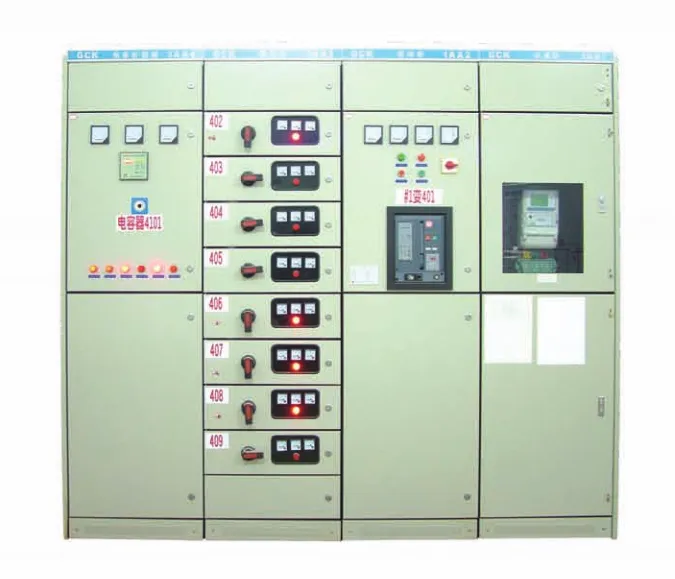
Real-Time Monitoring and Energy Analytics
High-quality IoT circuit breakers transform passive protection into intelligent energy management. By continuously sampling current and voltage at millisecond-scale intervals, these devices capture the full electrical signature of each circuit—enabling predictive load profiling, anomaly detection, and proactive maintenance before faults occur.
Granular current/voltage sampling for predictive load profiling
Modern IoT circuit breakers sample electrical parameters at rates exceeding 1 kHz, delivering waveform-level visibility into harmonic distortion, inrush currents, and dynamic load fluctuations. This high-fidelity data trains machine-learning models to distinguish normal operational patterns from early-stage failures—such as a recurring current spike signaling a failing compressor motor. Replacing equipment during scheduled downtime—rather than responding to emergency outages—reduces unplanned downtime and extends asset life. Continuous logging also establishes per-circuit load baselines, supporting capacity planning and preventing overload events.
Energy analytics dashboards: Optimizing kWh usage and demand charges
Real-time energy data flows into cloud-based dashboards that visualize consumption by circuit, zone, or equipment. Facility managers use these tools to identify peak demand windows, compare actual vs. baseline usage, and detect inefficiencies—like overnight operation of non-essential loads. Shifting flexible loads to off-peak hours directly reduces demand charges, which often constitute 30–60% of commercial electricity bills. Dashboards also support automated alerts (e.g., “Circuit 5 exceeded 80% load for 10 minutes”) and historical trend analysis for compliance reporting and continuous improvement.
Adaptive time-current curve modeling to prevent nuisance trips
Traditional breakers rely on fixed trip curves, increasing the risk of unnecessary disconnections during benign transients. IoT circuit breakers dynamically adjust their time-current curves using real-time load profiles and environmental inputs—including temperature and harmonic content. The system learns to differentiate harmless surges (e.g., motor startup) from genuine fault conditions, significantly reducing nuisance trips. This adaptive approach ensures consistent uptime in facilities with variable or cyclical loads—without compromising safety or protection integrity.
Smart Protection and Digital Tripping Precision
High-quality IoT circuit breakers integrate intelligent protection mechanisms that enhance electrical safety through digital precision—detecting hazardous conditions before they escalate into critical failures.
UL 1699B- and IEC 61008-1-compliant arc-fault and ground-fault detection
Advanced fault detection systems continuously monitor electrical waveforms to identify dangerous arc-faults and ground-faults. Compliance with UL 1699B and IEC 61008-1 ensures rigorous detection thresholds for fire-prone anomalies while minimizing false alarms through waveform analysis—distinguishing harmless arcs (e.g., switch actuation) from hazardous faults. According to the National Fire Protection Association’s 2025 report, this level of detection reduces electrical fire risk by 72% compared to conventional breakers.
Sub-20ms trip response with selective coordination across circuit tiers
IoT breakers interrupt faults in under 20 milliseconds—faster than human reaction time—preventing equipment damage and voltage sags that disrupt sensitive electronics. Selective coordination ensures only the breaker nearest the fault operates, avoiding cascading outages. For example, a ground fault in lighting circuits won’t trigger an unnecessary shutdown of HVAC systems. This precision maintains uptime in commercial environments while containing risks locally.
| Protection Feature | Response Time | System Impact |
|---|---|---|
| Standard Breakers | 30–100ms | Wider outage scope |
| IoT Breakers | <20ms | Localized isolation |
The multi-layered safety architecture combines speed with intelligent coordination—creating resilient power networks that automatically contain faults and prevent single-point failures from escalating into widespread blackouts.
Secure Connectivity and Standards-Based Interoperability
Wi-Fi, Zigbee, and Matter: Evaluating latency, hub dependency, and smart home platform support
Selecting the right communication protocol affects responsiveness, integration complexity, and long-term scalability. Wi-Fi offers high bandwidth and direct cloud connectivity but can introduce latency spikes during network congestion and depends on router stability. Zigbee provides low-power, mesh-based networking ideal for dense sensor deployments—but typically requires a dedicated hub, introducing both a single point of failure and potential processing delays. Matter, the emerging interoperability standard, reduces hub dependency by enabling secure, local device-to-device communication across HomeKit, Alexa, and Google Home ecosystems. Its deterministic local processing supports sub-20ms tripping decisions—making it especially suitable for mission-critical applications where proprietary gateways and cloud round-trips are unacceptable.
UL 67, UL 489, and IEC 60947-2 compliance for thermal derating, IP rating, and environmental resilience
Beyond connectivity, IoT circuit breakers must endure physical and electrical stresses defined by globally recognized safety standards. UL 67 governs panelboard enclosures and mandates proper thermal derating to prevent overheating when multiple breakers operate near capacity. UL 489 certifies molded-case breakers for short-circuit interruption and thermal-magnetic performance—even under elevated ambient temperatures. For international deployments, IEC 60947-2 specifies requirements for low-voltage switchgear, including IP ratings (e.g., IP65 for dust/water resistance) and resilience against humidity, vibration, and corrosive atmospheres. These certifications ensure solid-state electronics and embedded sensors maintain reliable, safe operation in demanding industrial or outdoor environments—without risking nuisance trips, accelerated aging, or compromised protection.
Thermal Management and Compact Solid-State Design
Effective thermal management is essential for IoT circuit breakers installed in space-constrained electrical panels. Solid-state designs generate 40–50% less heat than electromechanical equivalents while maintaining UL 489 compliance for temperature derating. Leading thermal solutions include:
- Microchannel heatsinks that increase surface area by 300% within compact footprints
- Phase-change materials absorbing up to 150 J/g during overload conditions
- Embedded thermistors that trigger pre-emptive load shedding at 85°C
These innovations enable a 95% reduction in physical footprint versus traditional breakers—while preserving full 10kA interrupting capacity. Consistent heat dissipation extends semiconductor lifespan by 3–5 years by mitigating junction degradation. Manufacturers validate thermal performance through simulation-driven design, with top-tier models achieving IP54 ratings without external cooling fans—ensuring reliability in confined, unventilated enclosures.
FAQs
What are IoT circuit breakers?
IoT circuit breakers are advanced devices integrated with sensors and communication protocols to provide real-time energy monitoring, predictive maintenance, and enhanced electrical safety.
How do IoT circuit breakers prevent nuisance trips?
They use adaptive time-current curve modeling, which dynamically adjusts based on real-time load profiles and environmental inputs to differentiate harmless surges from genuine fault conditions.
What are the benefits of using energy analytics dashboards?
Energy analytics dashboards optimize consumption by identifying inefficiencies, visualizing usage patterns, and enabling demand charge reductions through load shifting.
What is selective coordination in IoT breakers?
Selective coordination ensures only the breaker nearest the fault operates, preventing cascading outages and maintaining uptime in commercial environments.
Why are thermal management solutions important?
Thermal management prevents overheating, reduces physical footprints, extends semiconductor lifespan, and ensures reliable operation in confined spaces.