 EN
EN

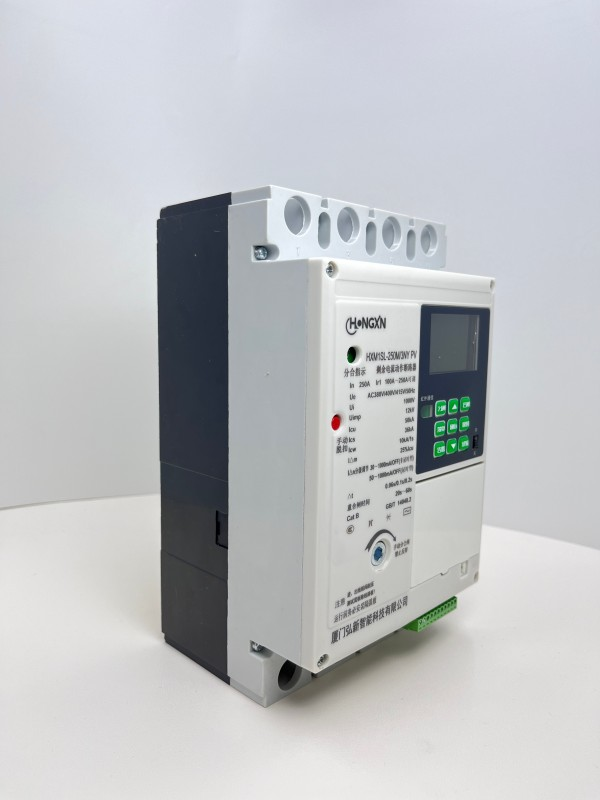
Core Medium Voltage Applications of Vacuum Circuit Breakers
Vacuum circuit breakers (VCBs) dominate the medium-voltage (MV) landscape—typically 1 kV to 52 kV—thanks to their sealed vacuum interrupters, which eliminate arc-related emissions and eliminate the need for compressed air or insulating oil. Their fast, reliable switching outperforms air and SF₆ alternatives, making them the preferred solution for feeder protection, bus-tie switching, no-load transformer isolation, and capacitive current interruption.
Feeder Protection and Bus‑Tie Switching in MV Substations
In MV substations, VCBs protect each outgoing feeder against overloads and short circuits. Upon fault detection, they extinguish the arc in under half a cycle—typically within 10 ms—limiting thermal stress on downstream transformers and cables. The vacuum interrupter’s high dielectric strength ensures consistent performance across repeated fault clearing, enabling decades of service with minimal maintenance.
For bus-tie applications, VCBs support rapid sectionalizing of the busbar, isolating faults or maintenance zones without disrupting the entire load. Their ability to close onto live busbars without restrike risk gives operators flexibility during load transfer and system restoration. Industrial plants and commercial facilities with dual-feed architectures rely on this capability—VCBs maintain integrity across hundreds of mechanical operations without degradation.
No‑Load Transformer Switching and Capacitive Current Interruption
No-load transformer disconnection presents a challenge: interrupting small inductive currents can generate damaging voltage surges if dielectric recovery is slow. VCBs mitigate this through near-instantaneous arc extinction and rapid contact separation, allowing the gap to regain full withstand strength immediately. Even after thousands of such operations, contact wear remains negligible.
Capacitive current interruption—such as from capacitor banks or long cable feeders—carries a high risk of re-ignition and transient overvoltages. The vacuum interrupter’s consistent, fast current-zero crossing and superior contact material performance eliminate restrike potential. As a result, VCBs are the industry standard for reactive power switching in MV networks. Utilities managing frequent capacitor bank operations prioritize them for reliability, low environmental impact, and long-term operational predictability.
Fault Protection and Transient Control with Vacuum Circuit Breakers
High-Speed Fault Clearing in Radial and Loop MV Networks
VCBs deliver exceptional fault-clearing speed in both radial and looped MV networks. In radial configurations—where power flows unidirectionally—they detect and clear overcurrents within ≤50 ms, minimizing thermal stress on equipment (IEEE PES 2023). In looped systems with bidirectional flow, precise coordination between VCBs enables selective tripping, preventing cascading outages. Their vacuum interrupters achieve dielectric recovery up to 100× faster than SF₆-based units, supporting up to 100,000 switching cycles without maintenance degradation—a critical advantage in urban underground cable networks, where fault currents can reach 40 kA.
Controlled Switching for Inrush and Recovery Voltage Suppression
Advanced VCBs integrate controlled switching technology that synchronizes contact movement with voltage zero-crossings. This reduces transformer inrush currents by up to 70% during energization, as confirmed by CIGRE studies. For capacitive loads—including cable feeders and capacitor banks—optimized copper-chromium contact materials cut reignition risk by 90% compared to legacy alloys. When paired with microprocessor-based relays, these breakers dynamically adjust switching angles using real-time grid data, limiting transient overvoltages to below 1.8 p.u., even during demanding back-to-back capacitor switching.
Expanding Role of Vacuum Circuit Breakers in HV and Hybrid Grid Environments
VCBs are increasingly deployed beyond traditional MV roles—into high-voltage (HV) and extra-high-voltage (EHV) transmission systems exceeding 72.5 kV. Leading grid operators now specify vacuum interruption for new EHV substations and critical corridors, especially where space constraints favor their compact footprint over bulkier SF₆ or oil-insulated alternatives. This expansion is accelerated by global efforts to phase out SF₆—a greenhouse gas with a GWP 23,500× greater than CO₂—under regulations like the EU F-Gas Regulation. Vacuum technology offers a technically mature, zero-GWP alternative for high-voltage applications.
At the same time, hybrid grid architectures—blending AC networks with HVDC links for renewable integration or cross-border interconnections—introduce complex fault dynamics and transient demands. VCBs demonstrate strong capability in managing these challenges, including controlled switching for capacitor banks and harmonic filters in converter stations. Their robustness supports the reliable integration of geographically dispersed wind and solar generation while enhancing overall grid resilience in modern, interconnected systems.
Driving Forces Behind Vacuum Circuit Breaker Adoption: Sustainability, Smart Integration, and SF₆ Phase-Out
Environmental and Regulatory Advantages Over SF₆-Based Switchgear
VCBs provide decisive environmental advantages over SF₆-based switchgear. With a global warming potential (GWP) of 23,500 times that of CO₂ over 100 years, SF₆ is strictly regulated under international climate frameworks like the EU F-Gas Regulation. VCBs eliminate gas handling, leakage risks, and end-of-life SF₆ recovery obligations. Their non-toxic, zero-GWP operation aligns directly with utility decarbonization goals—making them the sustainable default for new infrastructure and retrofits alike.
Seamless Integration with Digital Substations and Renewable-Focused Grid Architectures
Modern VCBs natively support digital substation architectures via IEC 61850-compliant communication protocols. This enables real-time monitoring of contact wear, insulation health, and operational readiness—key for grids managing variable renewable generation. Their modular, compact design simplifies retrofitting into legacy switchgear while accommodating the higher switching frequency required by solar and wind farms. Coupled with lower lifecycle costs and reduced maintenance needs, VCBs deliver both technical resilience and economic efficiency for utilities building smarter, more adaptive grid infrastructures.
FAQ
What are vacuum circuit breakers (VCBs) used for in medium voltage applications?
Vacuum circuit breakers (VCBs) are primarily used for feeder protection, bus-tie switching, no-load transformer isolation, and capacitive current interruption in medium voltage networks ranging from 1 kV to 52 kV.
Why are VCBs preferred over SF₆ and air-based systems?
VCBs are favored for their fast switching speeds, high dielectric strength, and zero greenhouse gas emissions. Unlike SF₆-based systems, VCBs are environmentally friendly and require less maintenance.
How do VCBs handle fault detection and isolation in MV substations?
VCBs detect faults and extinguish arcs within milliseconds, limiting thermal stress on downstream components. They support rapid sectionalizing and allow for live busbar operations without restrike risks.
Can VCBs be used for high-voltage (HV) applications?
Yes, VCBs are increasingly being deployed in high-voltage (HV) and extra-high-voltage (EHV) systems, offering a compact and sustainable alternative to SF₆ or oil-insulated switchgear.
What are the environmental benefits of VCBs?
VCBs are a zero-GWP alternative to SF₆-based systems. They eliminate gas leakage risks and comply with global environmental regulations, aligning with utility decarbonization goals.
How do VCBs support digital substations and renewable energy grids?
Modern VCBs integrate with digital systems via IEC 61850 protocols for real-time monitoring. They are compatible with the high switching demands of renewable energy sources like wind and solar.
Table of Contents
- Core Medium Voltage Applications of Vacuum Circuit Breakers
- Fault Protection and Transient Control with Vacuum Circuit Breakers
- Expanding Role of Vacuum Circuit Breakers in HV and Hybrid Grid Environments
- Driving Forces Behind Vacuum Circuit Breaker Adoption: Sustainability, Smart Integration, and SF₆ Phase-Out
-
FAQ
- What are vacuum circuit breakers (VCBs) used for in medium voltage applications?
- Why are VCBs preferred over SF₆ and air-based systems?
- How do VCBs handle fault detection and isolation in MV substations?
- Can VCBs be used for high-voltage (HV) applications?
- What are the environmental benefits of VCBs?
- How do VCBs support digital substations and renewable energy grids?